
Immunosuppressive Tumor Microenvironment IHC
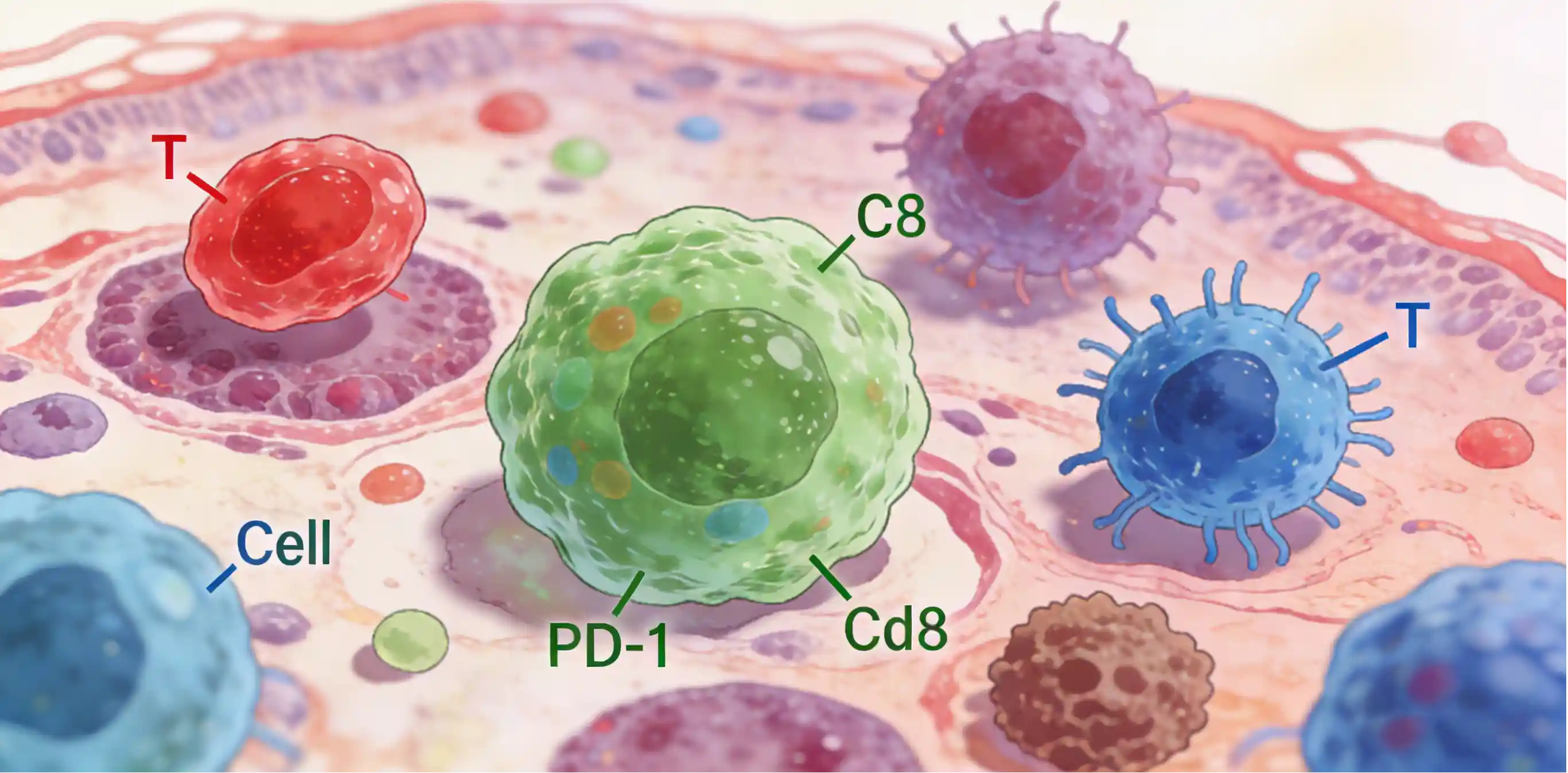 The immune system has the capability to detect and eliminate tumor cells, most notably through cytotoxic CD8+ T cell recognition of tumor antigens presented on the surface of tumor cells by MHC class I molecules. However, anti-tumor immune cells can be subject to various immunosuppressive mechanisms in the tumor microenvironment (TME). One of these mechanisms is the upregulation of PD-L1 by tumor cells and myeloid cells, which suppresses T cell function through interaction with PD-1. In addition, the tumor can recruit immunosuppressive cells, such as FoxP3+ regulatory T cells, and can promote polarization of cells to a pro-tumor and immunosuppressive phenotype, such as CD68+CD206+M2-like macrophages. The infiltration and function of cytotoxic CD8+ T cells can also be suppressed by stromal cells such as LRRC15+ immunosuppressive cancer-associated fibroblasts (CAFs).
Product List
| Target | Catalog# | Product Name | Reactivity | Application |
|---|---|---|---|---|
CD8 α | CD8 α Rabbit Monoclonal antibody | Human,Mouse,Rat | WB,IHC,IF,IP,ELISA |
Related Products
Super-sensitive ECL chemiluminescent reagent
References
- Inhibitory B7-family molecules in the tumour microenvironment. Zou W, et al. Nat Rev Immunol. 2008. [PMID: 18500231]
- Engagement of the PD-1 immunoinhibitory receptor by a novel B7 family member leads to negative regulation of lymphocyte activation. Freeman GJ, et al. J Exp Med. 2000. [PMID: 11015443]
- CD4 regulatory T cells in human cancer pathogenesis. Knutson KL, et al. Cancer Immunol Immunother. 2007. [PMID: 16819631]
- LRRC15+ myofibroblasts dictate the stromal setpoint to suppress tumour immunity. Krishnamurty AT, et al. Nature. 2022. [PMID: 36171287]