Single B Cell Rabbit Monoclonal Antibody Development
Harness the natural power of rabbit immunity.
Advanced single B cell technology for rapid rabbit monoclonal discovery. Preserve native heavy-light chain pairing, access exceptional affinity and specificity against challenging targets (phosphopeptides, haptens, small molecules). Complete timeline: 12-14 weeks.
Why Choose Single B Cell Platform?
Traditional antibody discovery platforms have limitations. Single B cell technology combines the best of natural immunity with modern throughput.
| Platform | Advantages | Limitations |
|---|---|---|
| Mouse Hybridoma | Mature technology, >90% approved therapeutic antibodies | Limited diversity, mouse IgG subclasses, restricted to mouse antigens |
| Rabbit Hybridoma | Better affinity, diverse epitope recognition | Myeloma cell line commercialization restricted, few providers |
| Display Technologies (Phage/Yeast) | High throughput, in vitro selection | Requires large libraries, limited by display system, loss of natural pairing |
| Single B Cell | Preserves native VH/VL pairing Access natural rabbit diversity | Requires specialized B cell handling and culturing expertise |
Why Rabbit? Technical Advantages of Rabbit Antibodies
Rabbits offer unique immunological advantages over mice for monoclonal antibody development — from GALT-driven diversification to simplified IgG structure. Each advantage is supported by peer-reviewed references with direct access.
Simplified IgG & κ1 Stability
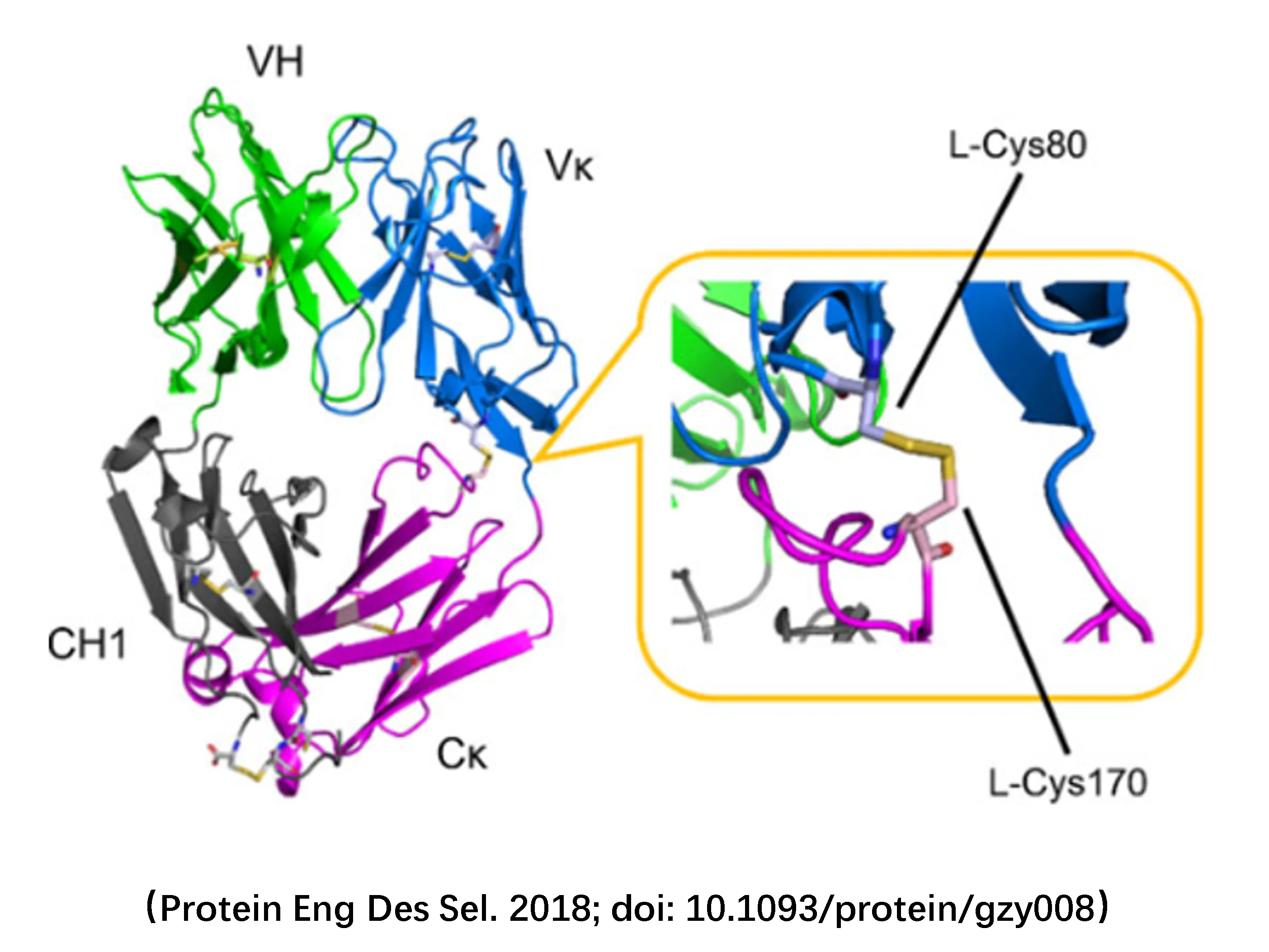
Mouse IgG has 5 subclasses; rabbit IgG has no subclasses—simplifying engineering. ~90% of rabbit antibodies use the κ1 light chain, which contains an extra intrachain disulfide bond between C80 and C171 in the variable region, conferring exceptional thermal and chemical stability.
Rabbit IgG-κ1 accounts for ~90% of light chains, with an intrachain disulfide bond in the κ variable region.
Superior Affinity & Small Epitopes
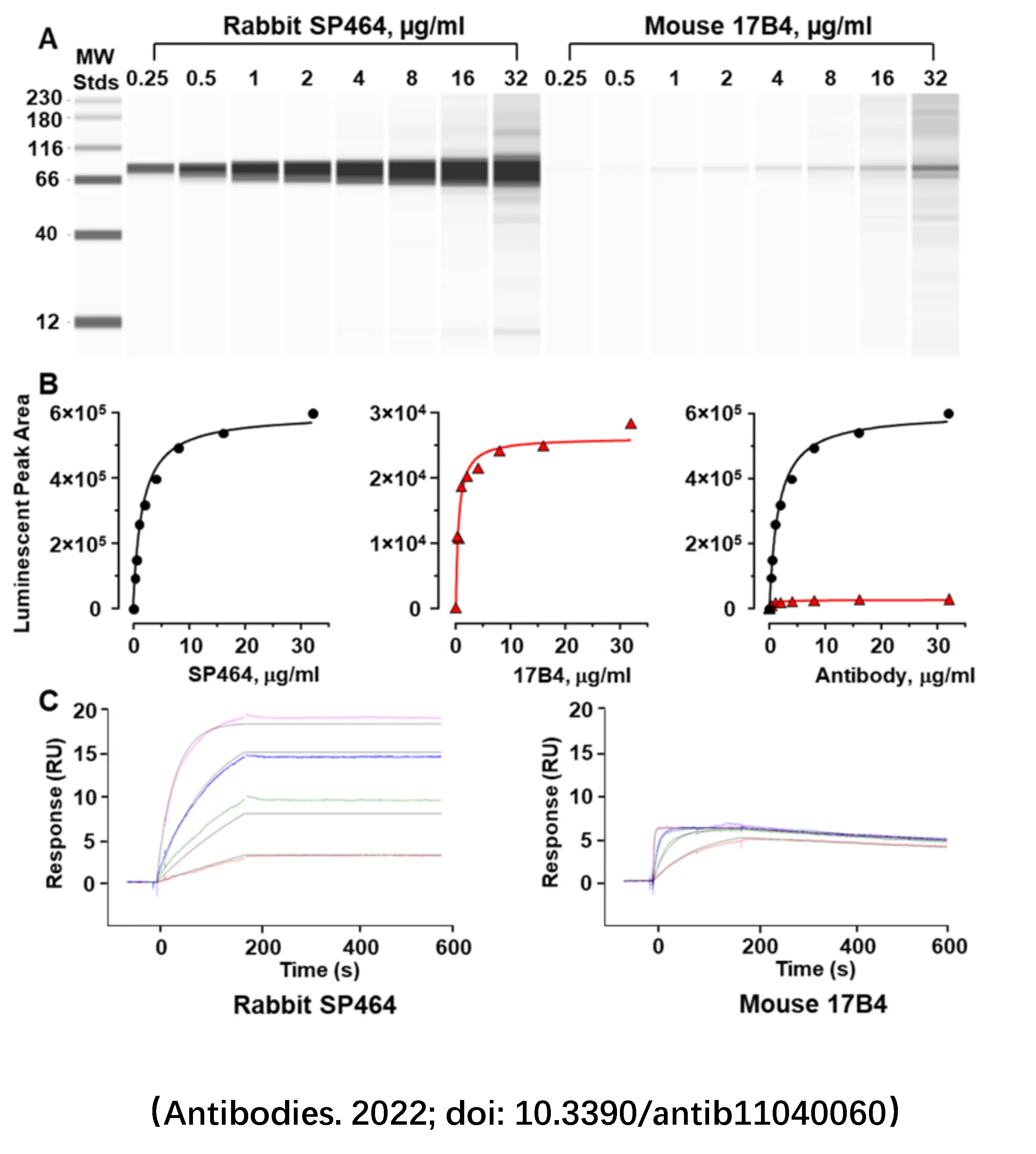
Rabbit monoclonal antibodies typically exhibit higher affinity than mouse counterparts and recognize smaller, conformational epitopes. They are ideal for:
- Phosphorylation-specific antibodies
- Carbohydrate antigens
- Small molecule haptens
- Peptide antigens with post-translational modifications
GALT-Driven Diversification
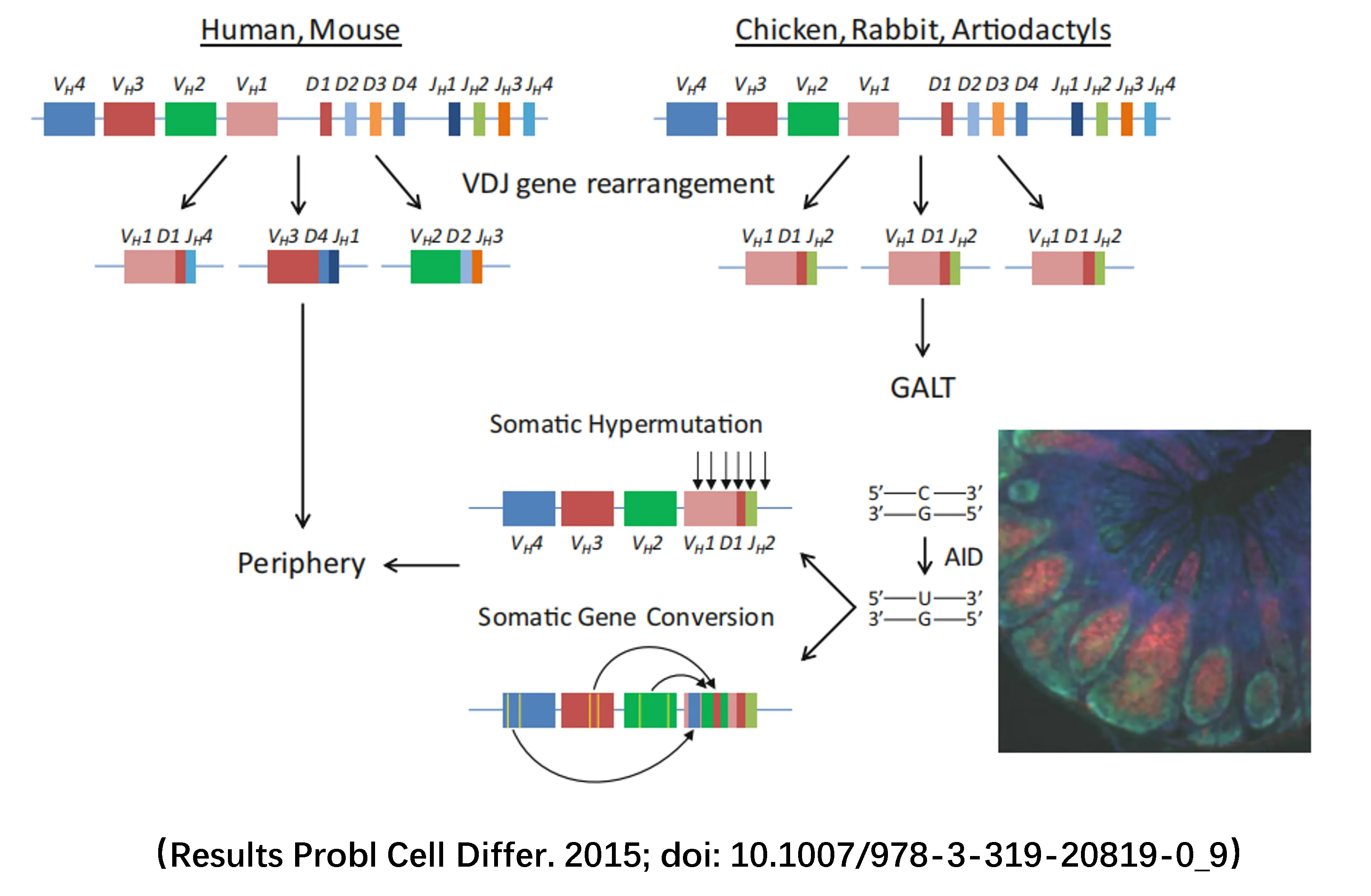
Unlike mice and humans, rabbit B cells undergo additional diversification after leaving the bone marrow. They migrate to gut-associated lymphoid tissue (GALT), particularly the appendix, where somatic hypermutation (SHM) and AID-mediated gene conversion continue to modify V(D)J genes. This greatly increases antibody diversity and affinity(include difficult epitopes—phosphopeptides, glycans, haptens, and small molecules).
Larger Size, Larger Spleen
Rabbits average 2.5 kg body weight vs. mouse ~25g. Rabbit spleen is approximately 50× larger, yielding many more antigen-specific B cells and greater clonal diversity.
Most mouse strains are inbred, limiting immune response diversity. Outbred rabbits generate more diverse antibody repertoires.

EnkiLife Single B Cell Rabbit mAb Platform
Simple Access to Superior Antibodies
Directly obtain high-quality antibody candidates with excellent specificity and affinity. Multiple clones available for screening.
High Success Rate Guarantee
Large numbers of validated clones delivered. Rabbit antibodies exhibit high sensitivity and recognize smaller epitopes.
Excellent Expression Compatibility
Recombinant antibodies produced in transient or stable systems (HEK293/CHO) ensure batch consistency, free from animal-derived variability.
Comprehensive QC Data
Every project includes SDS-PAGE, ELISA analysis, and Nanodrop quantification for full traceability.
Rapid Timeline
Traditional hybridoma screening takes ~1.5 months; our single B cell platform delivers candidates in 3-4 weeks from B cell isolation.
Service Workflow & Timeline
| Phase | Description | Timeline |
|---|---|---|
| 1. Project Design | Preliminary consultation, target review, immunization strategy design, recombinant antigen expression plan | 1-2 day |
| 2. Antigen Preparation | Recombinant protein expression, peptide synthesis, conjugation (as required) | 3-4 weeks |
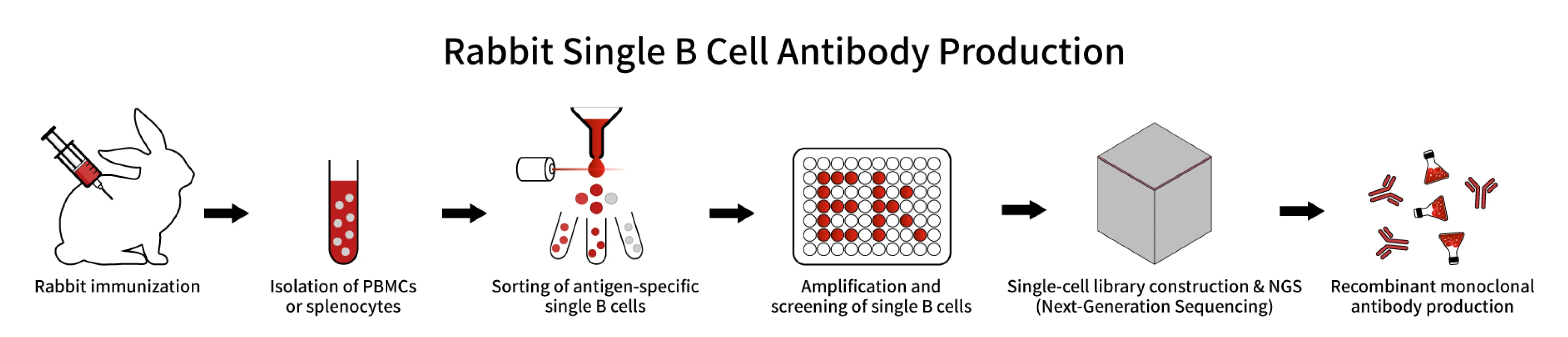
| 3. Immunization & B Cell Screening | Rabbit immunization (4 boosts), antigen-specific B cell sorting, single B cell culture | 3-5 weeks |
| 4. Recombinant Expression & Validation | Antibody gene amplification (RT-PCR), cloning into expression vectors, recombinant antibody production, ELISA validation | 2-4 weeks |
| 5. Final Delivery | Full experimental report, antigen and antibody clones/vectors, recombinant protein antigen, recombinant antibody | 1 day |
Total Timeline: Approximately 12-14 weeks from project start.
What You Receive
🔬Comprehensive Report
Full experimental methods, sequences, and validation data
🔒Clones & Vectors
Antibody genes in cloning vectors; antigen clones as applicable
📄Recombinant Antibody
Purified, validated rabbit monoclonal antibody (mg quantity)
🎯 Multiple Candidates
Several positive clones for downstream evaluation
Simple Quotation & Ordering
Consultation
TAM contacts you within 24h for strategy and quote.
Approval
Review and approve final order details and price.
Project Start
Project initiated; PM provides updates until delivery.
Start Your Monoclonal Project
To discuss your target and receive a customized proposal, please email order@enkilife.com. Our team is ready to assist you right away.
⬇ Download Antibody Request Form