
Cell Proliferation
Cell proliferation is an important concept in cell biology, referring to the process by which cells increase in number through division. It is the foundation for the growth, development, reproduction, and tissue repair of living organisms. Below is a detailed introduction to cell proliferation:
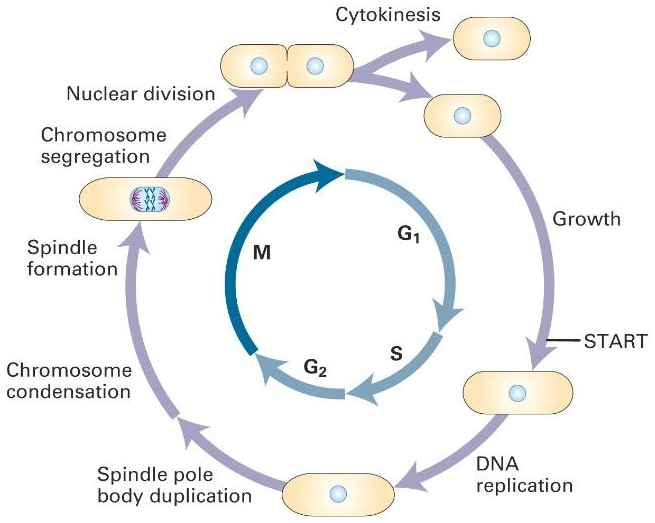
01 Question: Cell Cycle
Answer: The cell cycle refers to the entire process that a continuously dividing cell undergoes from the end of one division to the end of the next division.
Phases:
Interphase:
G1 Phase: Cell growth occurs, with synthesis of RNA and proteins in preparation for DNA replication.
S Phase: DNA replication takes place, doubling the number of chromosomes.
G2 Phase: The cell continues to grow and synthesizes proteins required for mitosis.
M Phase (Mitotic Phase): Cell division occurs, including mitosis and meiosis.
02 Question: Regulation of Cell Proliferation
Answer: Cell proliferation is a highly regulated process influenced by various factors, including intracellular signaling pathways, extracellular signaling molecules, and cell cycle checkpoints.
(1) Cell Cycle Checkpoints
Cell cycle checkpoints are key mechanisms for regulating the cell cycle, monitoring the cell's growth status, DNA damage, and chromosome attachment. The main checkpoints include:
G1 Checkpoint (Restriction Point): Monitors cell size and nutritional status to ensure the cell is ready for division.
G2 Checkpoint: Checks for DNA integrity to ensure there is no DNA damage before the cell enters mitosis.
Spindle Assembly Checkpoint (SAC): Monitors the correct attachment of chromosomes to the spindle apparatus to prevent errors in chromosome segregation.
(2) Intracellular Signaling Pathways
The regulation of cell proliferation also relies on various intracellular signaling pathways, such as:
CDK (Cyclin-Dependent Kinase) and Cyclin: CDK becomes activated upon binding with Cyclin, driving the progression of the cell cycle.
Rb Protein (Retinoblastoma Protein): Rb protein inhibits the E2F transcription factor to prevent cells from entering the S phase, acting as an important negative regulator.
p53 Protein: p53 is a tumor suppressor protein. When cellular DNA is damaged, p53 can initiate cell cycle arrest or apoptosis to prevent abnormal cell proliferation.
(3) Extracellular Signaling Molecules
Extracellular signaling molecules, such as growth factors and hormones, promote cell proliferation by binding to cell surface receptors and activating downstream signaling pathways.
Growth Factors: Such as Epidermal Growth Factor (EGF) and Fibroblast Growth Factor (FGF), which bind to cell surface receptors and activate intracellular signaling pathways to promote cell proliferation.
Hormones: Such as estrogen and testosterone, which regulate the proliferation of certain cells.
03 Question: Types of Cell Proliferation
Answer: Refers to the process by which cells divide to produce more cells, mainly including three methods: mitosis, meiosis, and amitosis.
(1) Mitosis:
Process: Mitosis is the primary method of somatic cell proliferation, consisting of four stages: prophase, metaphase, anaphase, and telophase.
Outcome: One parent cell divides into two daughter cells with identical genetic material, maintaining the same number of chromosomes.
Characteristics: During mitosis, chromosomes are clearly visible, and the spindle apparatus is involved in chromosome separation.
Examples: Cells in the root apical meristem of plants and bone marrow cells in animals proliferate through mitosis.
(2) Meiosis:
Process: Meiosis is the method of reproductive cell division, involving two consecutive cell divisions (meiosis I and meiosis II) with only one round of chromosome replication.
Outcome: One parent cell divides into four daughter cells, with the chromosome number halved.
Characteristics: During meiosis, homologous chromosomes pair up (synapsis) and undergo crossing over, increasing genetic diversity.
Examples: The formation of sperm and egg cells in higher organisms.
(3) Amitosis:
Process: The cell nucleus elongates and pinches into two parts first, followed by the division of the cytoplasm into two parts, resulting in two cells.
Characteristics: There is no appearance of chromosomes or spindle apparatus during the division process.
Examples: Cell division in certain lower organisms (such as protozoa) and plant cells.
04 Question: Physiological Significance of Cell Proliferation
Answer: Cell proliferation plays a significant role in the growth, development, and tissue repair of living organisms:
Growth of Organisms: The growth of organisms from small to large relies on cell proliferation. For example, the development from a fertilized egg to a complete individual involves a continuous increase in cell numbers.
Tissue Repair: When an organism is injured, cell proliferation replenishes damaged cells and repairs the injured tissue.
Reproduction: Single-celled organisms reproduce through cell division, while the proliferation of reproductive cells in multicellular organisms provides the basis for reproduction.
Maintenance of Tissue Homeostasis: Cell proliferation and apoptosis (programmed cell death) are balanced to maintain the homeostasis of tissues and organs.
05 Question: Cell Proliferation and Disease
Answer: Dysregulation of cell proliferation can lead to various diseases:
Cancer: Uncontrolled cell proliferation is a major cause of cancer. Cancer cells have the ability to proliferate indefinitely, bypassing the normal regulatory mechanisms of the cell cycle.
Developmental Abnormalities: Insufficient or excessive cell proliferation can lead to organ developmental abnormalities.
Regenerative Medicine: By regulating cell proliferation, tissue regeneration and repair may be achieved, such as through stem cell therapy.
Relevant Antibodies
| Target | Catalog# | Product Name | Reactivity | Application |
|---|---|---|---|---|
| CD105 | AMRe02931 | CD105 Rabbit Monoclonal Antibody | Human | WB,IHC,IF,IP,ELISA |
| MCM3 | AMRe01409 | MCM3 Rabbit Monoclonal Antibody | Human,Rat | WB,IHC,ICC/IF |
| MCM4 | AMRe84358 | MCM4 Rabbit Monoclonal Antibody | Human,Mouse | WB,FC,IP |
| MCM5 | AMRe04038 | MCM5 Rabbit Monoclonal Antibody | Human,Rat | WB,IHC,ICC/IF,IP |
| MCM6 | AMRe84106 | MCM6 Rabbit Monoclonal Antibody | Human,Mouse,Rat | WB,IHC,ICC/IF,ICC,FC,IP |
| MCM7 | AMRe86453 | MCM7 (DGR17001) Rabbit Monoclonal Antibody | Human,Mouse,Rat | WB,IHC,ICC/IF,FC,IP |
| PCNA | AMRe21497 | PCNA Rabbit Monoclonal Antibody | Human,Mouse,Rat,Rabbit,Dog,Duck | WB,IHC,IF,IP,ELISA |
| PCNA | AMRe86349 | PCNA (DGR14426) Rabbit Monoclonal antibody | Human,Mouse,Rat | WB,IHC,ICC/IF,FC,IP |
| JNK1 | AMRe02178 | JNK1 Rabbit Monoclonal Antibody | Human,Mouse,Rat | WB |
| JNK1/2/3 | AMRe21196 | JNK1/2/3 Rabbit Monoclonal antibody | Human,Mouse,Rat | WB,IF,IP,ELISA |
| Chk1 | AMRe01821 | Chk1 Rabbit Monoclonal Antibody | Human,Mouse,Rat | WB,IF,IP,ELISA |
| Chk1 | AMRe08761 | Chk1 (10U9) Rabbit Monoclonal Antibody | Human | WB,IHC,ICC/IF,FC,IF-P |
| Chk1 | AMRe21249 | Chk1 Rabbit Monoclonal Antibody | Human,Mouse,Rat | WB,ICC/IF,ELISA,IP |
| PP2A | AMRe02461 | PP2A alpha/beta Rabbit Monoclonal Antibody | Human,Mouse,Rat,Hamster | WB,IHC,ICC/IF,IP |
| PP2A | AMRe83793 | PP2A alpha+beta Rabbit Monoclonal | Human,Mouse,Rat | WB,IHC,ICC/IF,ICC,IP |
| Survivin | AMRe02654 | Survivin Rabbit Monoclonal Antibody | Human | WB,IF,ELISA |
| Survivin | AMRe21501 | Survivin Rabbit Monoclonal Antibody | Human,Mouse,Rat | WB,ICC/IF,ELISA,IP |
| Survivin | AMRe83774 | Survivin Rabbit Monoclonal Antibody | Mouse,Rat | WB,IHC,IP |
| Cyclin A1/A2 | AMRe09579 | Cyclin A1/A2 (9S13) Rabbit Monoclonal Antibody | Human | WB,IHC,IP,IF-P |
| CyclinA2 | AMRe01870 | Cyclin A2 Rabbit Monoclonal Antibody | Human,Mouse,Rat | WB,IHC,ICC/IF |
| Cyclin A2 | AMRe21450 | Cyclin A2 Rabbit Monoclonal Antibody | Human,Mouse,Rat | WB,IHC,IF,ELISA |
| Cyclin A2 | AMRe85471 | Cyclin A2 Rabbit Monoclonal Antibody | Human,Mouse,Rat | WB,IHC,ICC,IP |
| CyclinB1 | AMRe04051 | Cyclin B1 Rabbit Monoclonal Antibody | Human | WB,ICC/IF,IP |
| CyclinB2 | AMRe83839 | Cyclin B2 Rabbit Monoclonal Antibody | Human,Mouse,Rat | WB,IHC,ICC/IF,ICC,IP |
| CyclinD1 | AMRe21529 | Cyclin D1 Rabbit Monoclonal Antibody | Human,Mouse,Rat,Rabbit,Pig,Geese | WB,IHC,IF,IP,ELISA |
| CyclinD2 | AMRe86391 | Cyclin D2 (DGR12228) Rabbit Monoclonal Antibody | Human | WB,ICC/IF,FC,IP |
| CyclinE1 | AMRe21594 | Cyclin E1 Rabbit Monoclonal Antibody | Human,Mouse,Rat,Pig | WB,IHC,IF,IP,ELISA |
| CyclinE2 | AMRe04069 | Cyclin E2 Rabbit Monoclonal Antibody | Human | WB,ICC/IF,IP |
| CyclinE2 | AMRe01872 | Cyclin E2 Rabbit Monoclonal Antibody | Human | WB,IHC,ICC/IF |
| CyclinH | AMRe83840 | Cyclin H Rabbit Monoclonal Antibody | Human,Mouse | WB,IHC,ICC/IF,ICC,FC,IP |
| CDK1 | AMRe01805 | CDK1 Rabbit Monoclonal Antibody | Human | WB |
| CDK2 | AMRe21498 | CDK2 Rabbit Monoclonal Antibody | Human,Mouse,Rat | WB,IHC,ICC/IF,ELISA,IP |
| CDK4 | AMRe01808 | CDK4 Rabbit Monoclonal Antibody | Human,Mouse,Rat | WB,IHC |
| CDK4 | AMM03450 | CDK4 (3F9) Mouse Monoclonal Antibody | Human,Mouse,Rat | WB |
| CDK6 | AMRe21561 | CDK6 (PT0069R) Rabbit Monoclonal Antibody | Human | WB,IHC,ICC/IF,ELISA,IP |
| CDK7 | AMRe86319 | CDK7 (DGR35235) Rabbit Monoclonal Antibody | Human,Mouse,Rat | WB,IHC,FC,IP |
| ρ16 | AMRe21393 | p16 INK4A Rabbit Monoclonal Antibody | Human,Mouse | WB,IF,IP,ELISA |
| ρ21 | AMRe21528 | p21 Rabbit Monoclonal Antibody | Human,Rat,Bovine | WB,IHC,IF,IP,ELISA |
| ρ21 | AMRe86606 | p21 (DGR11273) Rabbit Monoclonal Antibody | Human | WB,IHC,ICC/IF,FC,IP |
| ρ57 | AMRe15653 | p57 Kip2 (12I5) Rabbit Monoclonal Antibody | Human | WB,IHC,ICC/IF,IP |
Related Products
Super-sensitive ECL chemiluminescent reagent
 | Voisey Voisey is a technical support specialist at EnkiLife, proficient in immunology and cell biology. She is committed to providing customers with professional and efficient technical support. Additionally, she is involved in research on customers' fields of study and designs highly cost-effective solutions for them. |