
Exosomes
In the world of cells, there exists a mysterious "messenger" that, despite its minuscule size, plays a crucial role in cellular communication. These are exosomes— the "secret weapon" of intercellular signaling.
01 Exosomes: The Cell's "Little Packages"
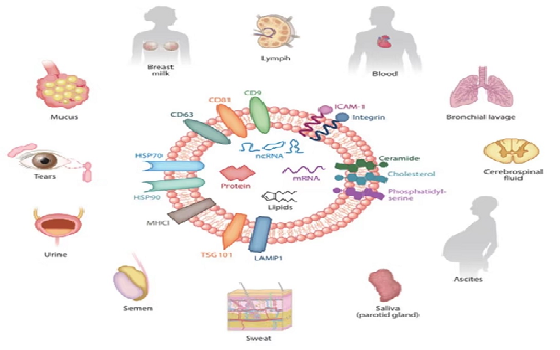
Exosomes are tiny vesicles secreted by cells, typically ranging in diameter from 30 to 150 nanometers. Their "outer layer" is composed of a lipid bilayer, while their interior is packed with various "cargo," including proteins, lipids, mRNA, miRNA, and other biomolecules. These "little packages" act like the cell's "suitcases," packing up materials and information from within the cell and transporting them to other cells. The formation process of exosomes is quite fascinating. They primarily originate from multivesicular bodies (MVBs) within the cell. When MVBs fuse with the cell membrane, exosomes are released into the extracellular environment. Once in the extracellular space, these "little packages" function like "messengers," seeking out target cells and delivering the information they carry.
02 The "Super Messenger" Function of Exosomes
(1) Intercellular Communication
Exosomes serve as a vital bridge for intercellular communication. They can deliver their cargo of biomolecules to other cells, thereby regulating cellular functions. For example, immune cells can use exosomes to transmit immune signals, activating other immune cells to collectively combat pathogen invasion. This "dialogue" between cells is essential for maintaining immune balance in the body.
(2) Tissue Repair
Exosomes also play a significant role in tissue repair. When the body is injured, stem cells release exosomes carrying growth factors and cytokines that promote the repair and regeneration of damaged tissues. For instance, in the process of skin wound healing, exosomes derived from stem cells can accelerate wound closure and reduce scar formation.
(3) Disease Therapy
Exosomes hold great potential for disease treatment. Since they can carry drugs or therapeutic molecules, they can serve as a novel drug delivery system. For example, researchers can encapsulate anti-cancer drugs within exosomes and deliver them specifically to tumor cells. This "targeted delivery" method can enhance drug efficacy while minimizing damage to normal cells.
03 The "Fingerprint" Features of Exosomes
Exosomes have unique protein markers on their surface, which act like their "fingerprints" and help us identify and isolate them. For example, proteins such as CD63, CD81, and CD9 are hallmark proteins of exosomes. By detecting these markers, we can extract exosomes from complex biological samples and study their composition and function.
04 The "Rising Star" Potential of Exosomes
(1) Early Cancer Diagnosis
Research on exosomes is rapidly advancing, with broad application prospects in the medical field. Scientists are exploring the use of exosomes in early cancer diagnosis. Since exosomes can carry specific markers from tumor cells, cancer can potentially be screened for by detecting exosomes in the blood.
(2) Regenerative Medicine
Exosomes are also gaining attention in regenerative medicine. They can act as a "natural cytokine reservoir," promoting tissue repair and regeneration. For example, in research on neurodegenerative diseases, exosomes have been found to promote the regeneration and functional recovery of nerve cells.
(3) Personalized Medicine
Exosomes can also be used in personalized medicine. The biomolecules they carry reflect the health status of cells and can serve as biomarkers to monitor disease progression and treatment efficacy. For example, in cancer treatment, analyzing gene expression and protein levels in exosomes can help tailor more precise treatment plans for patients.
05 Exosomes: Paving the Way for a New Era in Medicine
Exosomes are the "super messengers" of intercellular communication, ferrying vital information and materials between cells. As research continues to deepen, exosomes are poised to become a novel therapeutic and diagnostic tool for diseases. Let us look forward to more breakthroughs in the medical field involving exosomes, bringing new hope for human health!
Relevant Antibodies
| Catalog# | Product Name | Reactivity | Application |
|---|---|---|---|
| AMRe01628 | ALIX Rabbit Monoclonal Antibody | Human,Hamster,Rat | WB |
| AMRe21609 | ALIX Rabbit Monoclonal antibody | Human,Mouse,Rat | WB,IHC,ICC/IF,ELISA,IP |
| AMRe86512 | alpha 1 Antitrypsin (DGR12015) Rabbit mAb | Human | WB,IHC,ICC/IF,IP |
| AMRe21314 | CD63 Rabbit Monoclonal antibody | Human,Mouse,Rat | WB,IHC,ICC/IF,ELISA,IP |
| AMRe03764 | CD81 Rabbit Monoclonal Antibody | Human,Mouse | WB,IHC,ICC/IF |
| AMRe08466 | CD82 (8T8) Rabbit Monoclonal Antibody | Human | WB |
| AMRe08482 | CD9 (17X5) Rabbit Monoclonal Antibody | Human,Mouse,Rat,Bovine | WB,IHC,IF,IP,ELISA |
| AMRe21345 | CD9 Rabbit Monoclonal antibody | Human,Mouse,Rat | WB,IHC,ICC/IF,ELISA,IP |
| AMRe21166 | Flotillin-1 Rabbit Monoclonal antibody | Human,Mouse,Rat | WB,IHC,IF,IP,ELISA |
| AMRe21510 | Hsp60 Rabbit Monoclonal antibody | Human,Mouse,Rat | WB,IHC,ICC/IF,ELISA,IP |
| AMRe21556 | Hsp70 Rabbit Monoclonal antibody | Human,Mouse,Rat | WB,IHC,ICC/IF,ELISA,IP |
| AMRe21616 | Hsp90 Rabbit Monoclonal antibody | Human,Mouse,Rat | WB,IHC,IF,IP,ELISA |
| AMRe04092 | Nicastrin Rabbit Monoclonal Antibody | Human,Mouse,Rat | WB,IP |
| AMRe84293 | Nicastrin Rabbit Monoclonal | Human | WB,ICC |
| AMRe87502 | PDLIM7 (DGR19922) Rabbit mAb | Human | WB,IHC,FC |
| AMRe87790 | Syntenin (DGR15736) Rabbit mAb | Human | WB,IHC,ICC/IF,FC,IP |
| AMRe02724 | TSG101 Rabbit Monoclonal Antibody | Human,Mouse,Rat | WB,IF,IP,ELISA |
| AMRe19359 | TSG101 (10N13) Rabbit Monoclonal Antibody | Human,Mouse,Rat | WB,IHC,ICC/IF,FC |
Related Products
Super-sensitive ECL chemiluminescent reagent
References
- Sanju Tamang. "DNA Damage and DNA Repair: Types and Mechanism" Microbe Notes (2023)

Voisey
Voisey is a technical support specialist at EnkiLife, proficient in immunology and cell biology. She is committed to providing customers with professional and efficient technical support. Additionally, she is involved in research on customers' fields of study and designs highly cost-effective solutions for them.