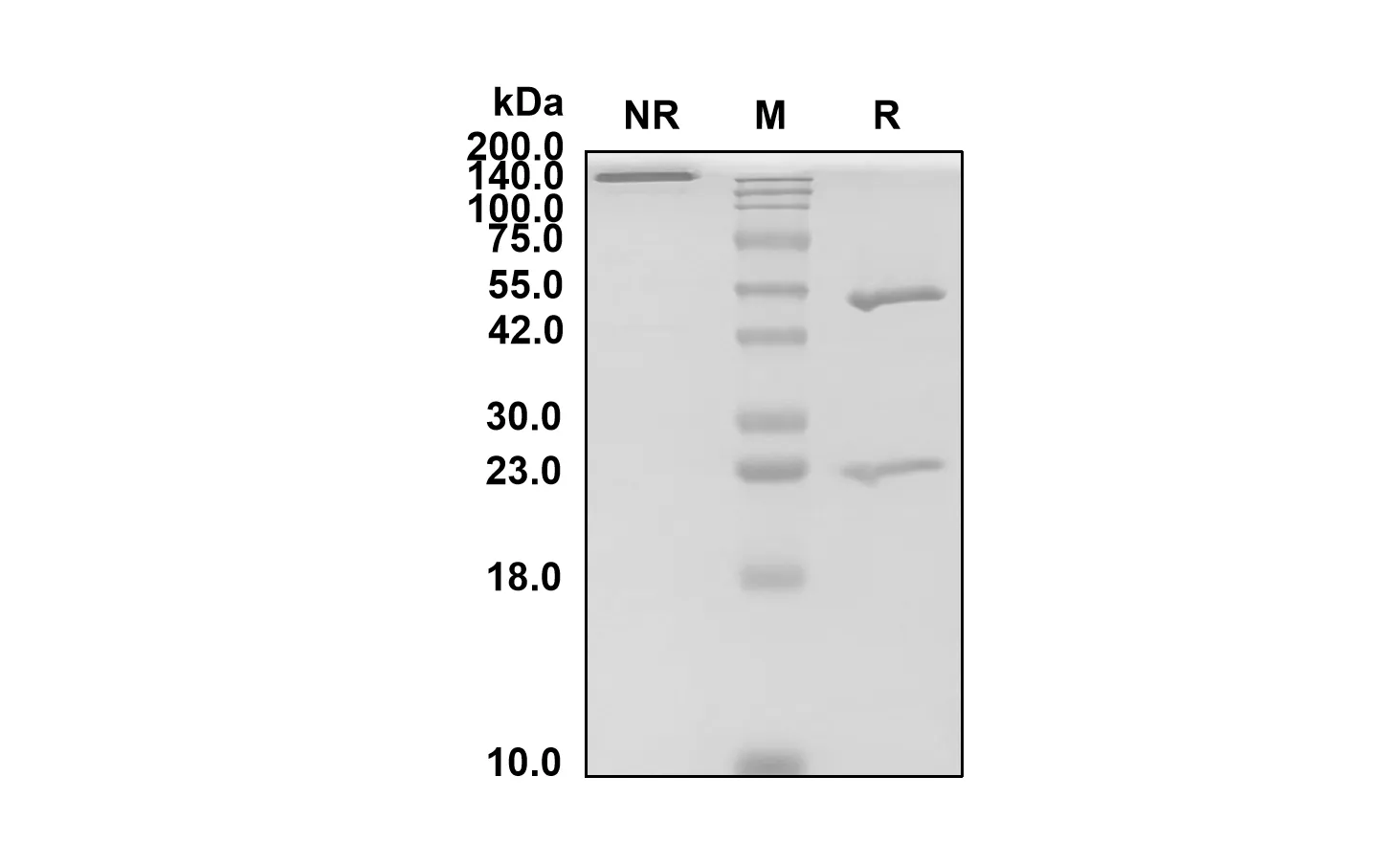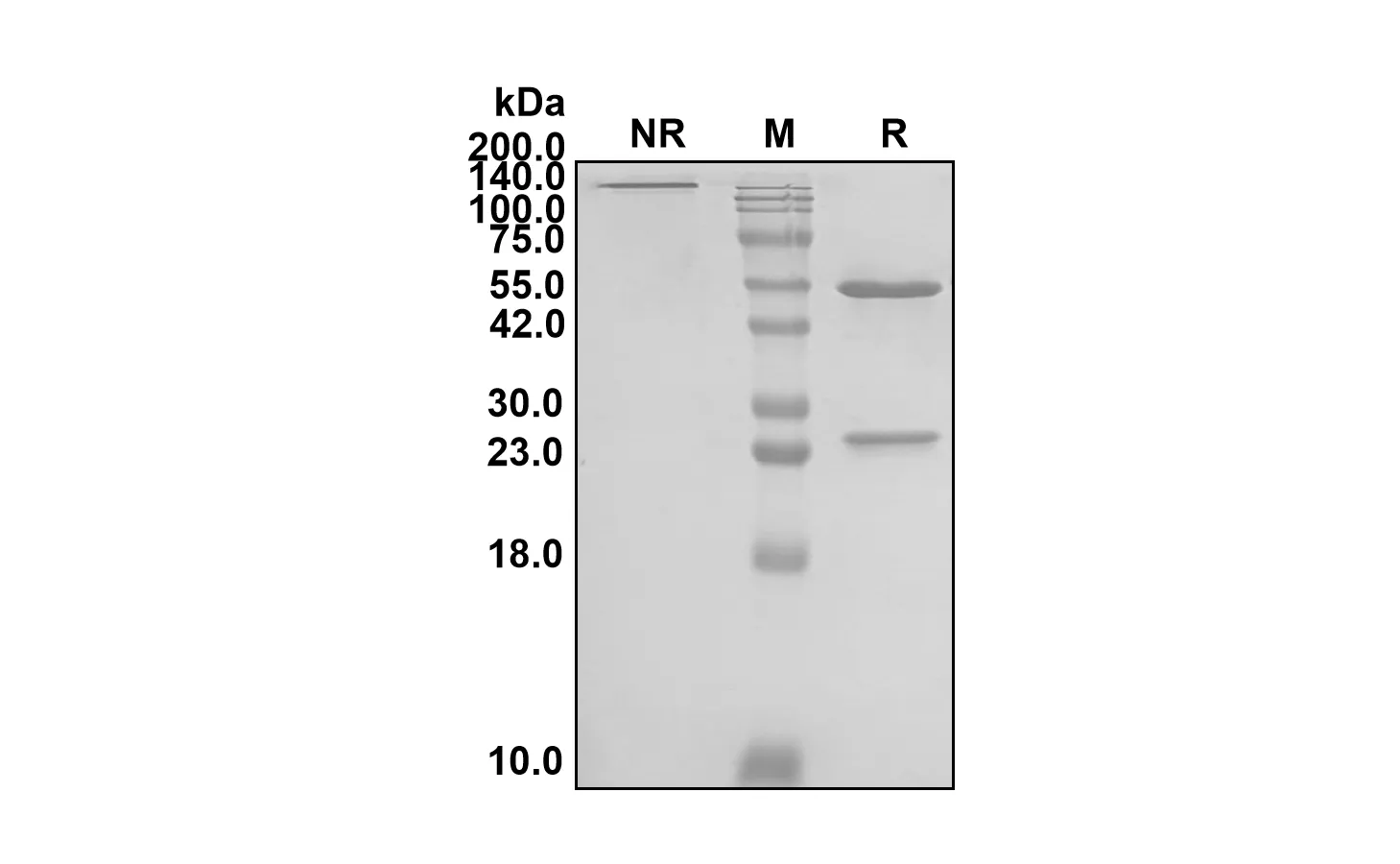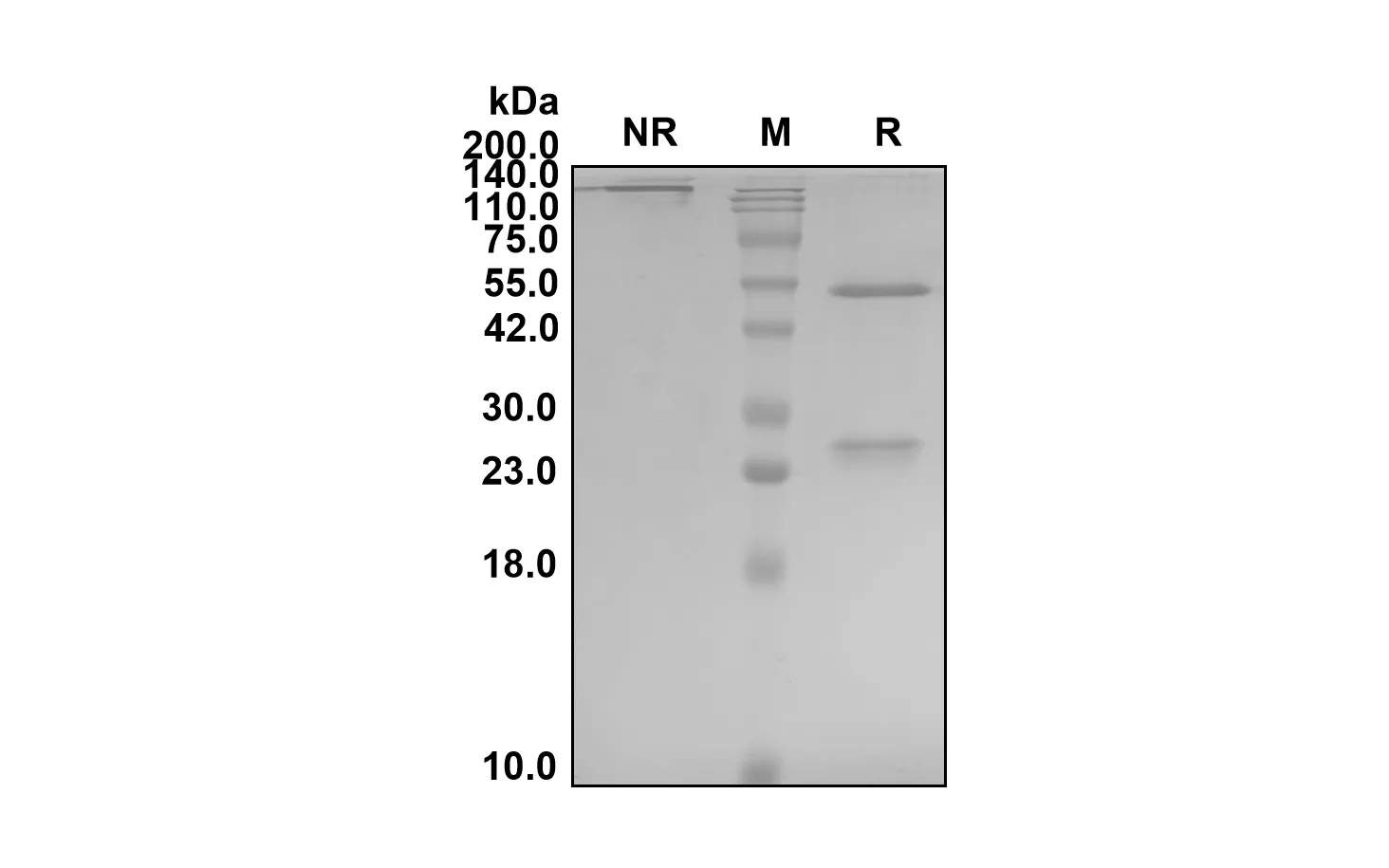



Summary
Background
This non-therapeutic biosimilar antibody uses the same variable regions from the therapeutic antibody Adalimumab making it ideal for research use. This Adalimumab biosimilar reacts with human TNFα (tumor necrosis factor-alpha) a multifunctional proinflammatory cytokine. TNFα belongs to the TNF superfamily of cytokines and signals through its two receptors, TNFR1 and TNFR2 which can be activated by both the soluble trimeric and membrane-bound and forms of TNFα. TNFα is primarily produced by macrophages in response to foreign antigens such as bacteria (lipopolysaccharides), viruses, and parasites as well as mitogens and other cytokines but can also be expressed by monocytes, neutrophils, NK cells, CD4 T cells and some specialized dendritic cells. TNFα is known to play key roles in a wide spectrum of biological processes including immunoregulation, cell proliferation, differentiation, apoptosis, antitumor activity, inflammation, anorexia, cachexia, septic shock, hematopoiesis, and viral replication. TNFα dysregulation has been implicated in a variety of diseases, including autoimmune diseases, insulin resistance, and cancer. Adalimumab blocks the interaction of TNFα with the TNFR1 (p55) and TNFR2 (p75) resulting in a down-regulation of the inflammatory response associated with autoimmune diseases.