
Interleukin receptors are mainly divided into three categories: type I, type II and atypical receptors. Type II receptors primarily correspond to IL-10, IL-20, IL-22 and IL-28; atypical receptors mainly include IL-1 and IL-8 receptors; and the remaining interleukin receptors all belong to the type I category.
| Gene Name/Alias | Uniprot ID | Protein Name | Receptors |
|---|---|---|---|
| IL-1 α | P01583 | Interleukin-1 alpha | IL1R1, IL1R2 |
| IL-1 β | P01584 | Interleukin-1 beta | IL1R1, IL1R2 |
| IL-2 | P60568 | Interleukin-2 | IL2RA, IL2RB, IL2RG |
| IL-3 | P08700 | Interleukin-3 | IL3RA, IL3RB |
| IL-4 | P05113 | Interleukin-4 | IL4R |
| IL-5 | P05113 | Interleukin-5 | IL5RA, IL3RB |
| IL-6 | P05231 | Interleukin-6 | IL6R |
| IL-7 | P13232 | Interleukin-7 | IL7R |
| IL-8 /CXCL8 | P10145 | Interleukin-8 | IL-8, IL8RB |
| IL-9 | P15244 | Interleukin-9 | IL9R |
| IL-10 | P22301 | Interleukin-10 | IL10RA |
| IL-11 | P20809 | Interleukin-11 | IL11RA |
| IL-12 α | P29459 | Interleukin-12 subunit alpha | IL12RB1 |
| IL-13 | P35225 | Interleukin-13 | IL13RA1, IL13RA2 |
| IL-14/TXLNA | P40222 | Alpha-taxilin | Unknown |
| IL-15 | P40933 | Interleukin-15 | IL15RA |
| IL-16 | Q14005 | Pro-interleukin-16 | CD4 |
| IL-17 α | Q16552 | Interleukin-17A | IL17RA |
| IL-18 | Q14116 | Interleukin-18 | IL18R1 |
| IL-19 | Q9UHD0 | Interleukin-19 | IL20R |
| IL-20 | Q9NYY1 | Interleukin-20 | IL20R |
| IL-21 | Q9HBE4 | Interleukin-21 | IL21R |
| IL-22 | Q9GZX6 | Interleukin-22 | IL22RA1 |
| IL-23 | Q9NPF7 | Interleukin-23 subunit alpha | IL23R |
| IL-24 | Q13007 | Interleukin-24 | IL20R |
| IL-25 | Q9H293 | Interleukin-25 | LY6E |
| IL-26 | Q9NHP9 | Interleukin-26 | IL20R1 |
| IL-27 α | Q8NEV9 | Interleukin-27 subunit alpha | IL27RA |
| IL-27 β | Q14213 | Interleukin-27 subunit beta | IL27RA |
| IL-28 | Q8IU57 | Interferon lambda receptor 1 | IL28R |
| IL-29/IFNL1 | Q8IU54 | Interferon lambda-1 | Unknown |
| IL-30 | Q8NEV9 | Interleukin-27 subunit alpha | Unknown |
| IL-31 | Q6EBC2 | Interleukin-31 | IL31RA |
| IL-32 | P24001 | Interleukin-32 | Unknown |
| IL-33 | O95760 | Interleukin-33 | Unknown |
| IL-35 | Q14213 | Consist of IL-12α and IL-27β chains | Unknown |
| IL-36 α | Q9UHA7 | Interleukin-36 alpha | Unknown |
| IL-36 β | Q9NZH7 | Interleukin-36 beta | Unknown |
| IL-36 γ | Q9NZH8 | Interleukin-36 gamma | Unknown |
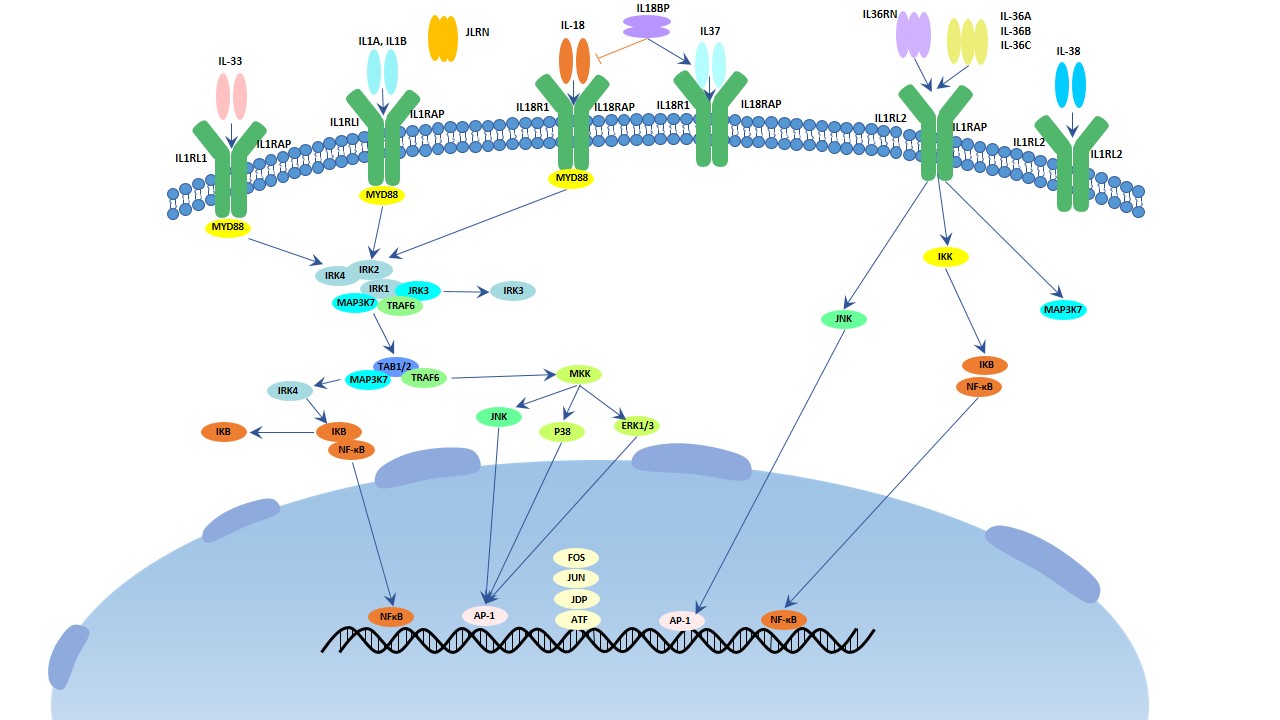
The IL-1 family contains 11 distinct members. Typical members such as IL-1, IL-18, IL-33 and IL-36 bind specifically to corresponding primary membrane receptors. Activation of IL-1α, IL-1β, IL-18, IL-33 and multiple IL-36 isoforms can trigger downstream MAPKK and NF-κB cascades, ultimately driving inflammatory reactions. Conversely, several other members of the IL-1 family exert anti-inflammatory biological effects. As a core pro-inflammatory cytokine, IL-1 participates in the co-stimulation of helper T cells, promotes the maturation and proliferation of B lymphocytes, activates NK cells, and serves as a key regulatory factor in the occurrence and development of inflammation.
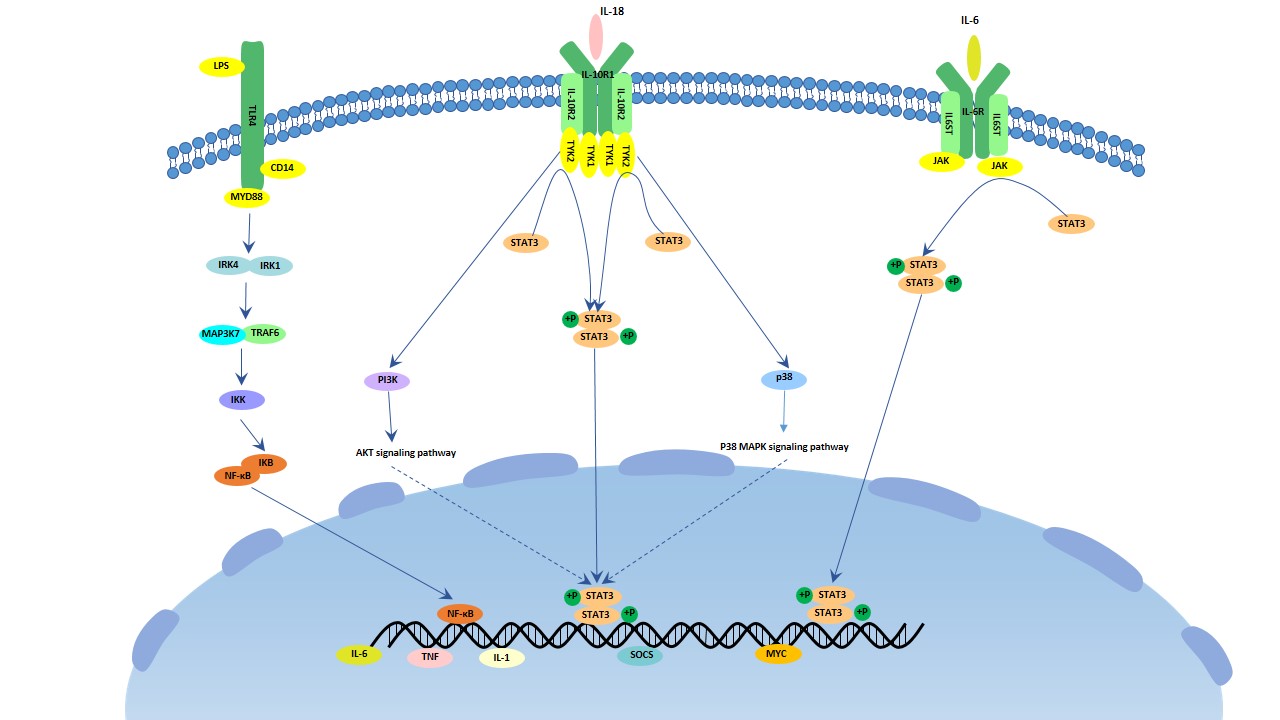
IL-10 is a classic anti-inflammatory cytokine, mainly secreted by activated T lymphocytes, B cells, macrophages and mononuclear cells. It can regulate the cytokine secretion profile of macrophages, promote the activation of B cells and the differentiation of Th2 cells, while effectively suppressing the activation and cytokine release of Th1 cells. Endogenous IL-10 exists in the form of homodimer, which binds to the tetrameric heterodimeric IL-10 receptor complex, thereby blocking the transduction of IL-6, TNF and other pro-inflammatory signaling pathways. Current studies have confirmed that IL-10 is closely associated with the progression of non-small cell lung cancer.
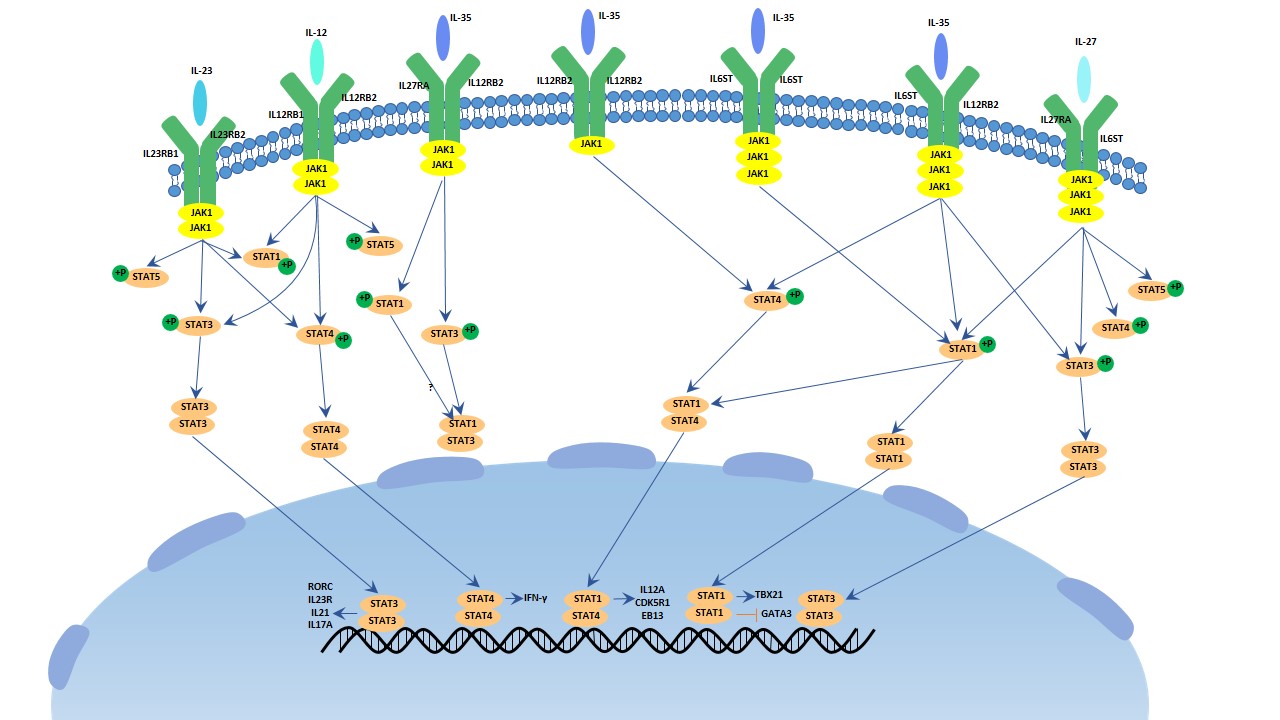
The IL-12 family consists of four major members. As a branch of the IL-6 superfamily, IL-12, IL-25, IL-27 and IL-35 are unique heterodimeric cytokines. They activate the JAK/STAT signaling axis and induce the phosphorylation modification of STAT1/3/4 proteins to exert biological functions. IL-12 is essential for initiating and maintaining Th1-type cellular immunity, assisting the host in resisting invasion and infection by various intracellular pathogens.
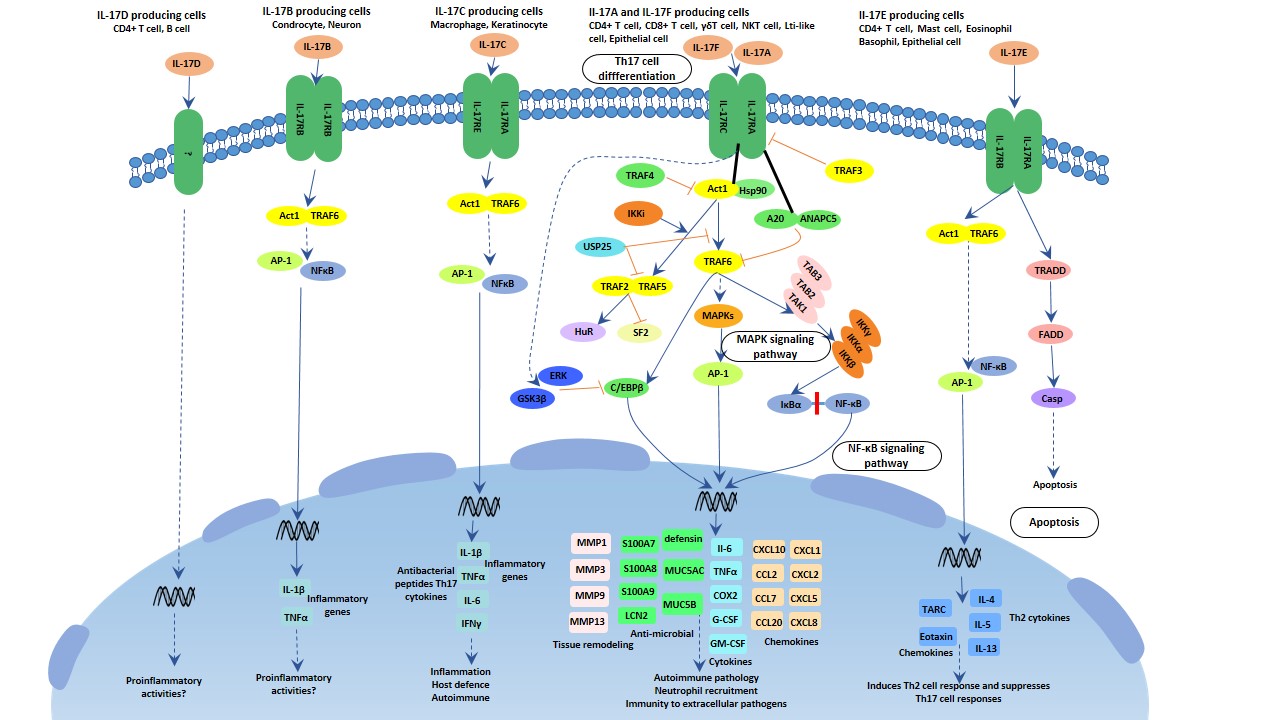
The IL-17 family includes 6 ligands and 5 corresponding receptors, playing an indispensable role in innate and adaptive immune regulation. IL-17A is the signature molecule of this family, which defends the host against extracellular microbial infections and mediates excessive inflammatory damage in multiple autoimmune diseases; IL-17C shares similar biological properties with IL-17A. IL-17F mainly participates in mucosal immune defense, while IL-17E enhances Th2-type immune responses. The IL-17 family can activate downstream MAPK, NF-κB and C/EBPs signaling axes to induce the expression of antibacterial cytokines and chemokines, and the adaptor protein Act1 is recognized as the core transduction mediator in this pathway.
IL-1 contains two main subtypes: IL-1α and IL-1β. IL-1α is widely expressed in various cell types, while IL-1β is synthesized and secreted in specific tissues. Mature IL-1β is generated via cleavage by caspase-1, and caspase-1 activation relies on the assembly of intracellular inflammasome complexes. IL-1 can induce pain response and short-term sleep changes, which provides a new direction for exploring the correlation between inflammatory factors and physical fatigue. In addition, IL-1 can stimulate the production of nitric oxide, chemokines and adhesion molecules, triggering cartilage tissue damage; whereas the IL-1 receptor antagonist can competitively bind to the same receptor to block IL-1 mediated pathological damage. These research findings help to clarify the pathological mechanism of chronic inflammatory joint diseases.
Over the past 36 years, IL-2 has always been a research hotspot, with broad application prospects in the immunotherapy of malignant tumors and other diseases. However, high-dose IL-2 treatment often brings obvious adverse reactions. Therefore, optimizing the administration cycle and matching the functional status of