
Size:50μL Price:$118
Size:100μL Price:$220
Size:200μL Price:$380
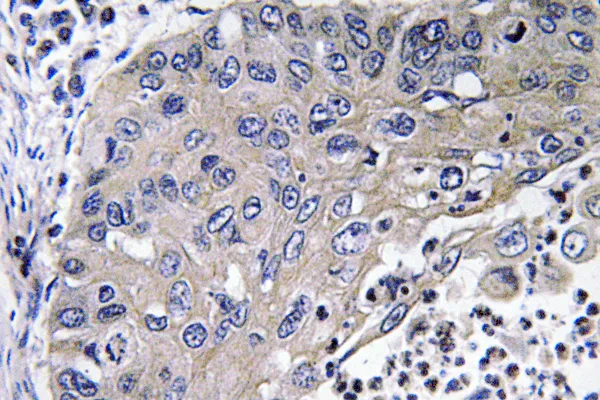
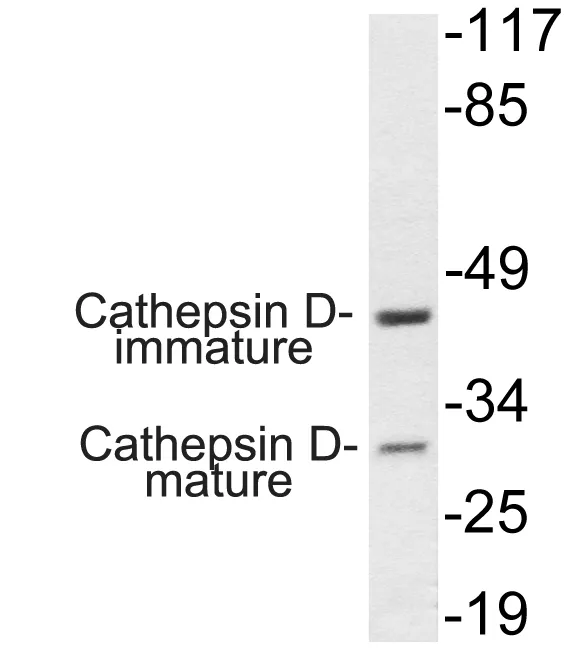
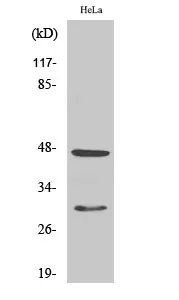
Application:WB,IHC,ICC/IF,ELISA
Reactivity:Human,Rat,Mouse
Conjugate:Unconjugated
Optional conjugates: Biotin, FITC (free of charge). See other 26 conjugates.
Gene Name:CTSD
Summary
Performance
Immunogen
Application
Background
This gene encodes a member of the A1 family of peptidases. The encoded preproprotein is proteolytically processed to generate multiple protein products. These products include the cathepsin D light and heavy chains, which heterodimerize to form the mature enzyme. This enzyme exhibits pepsin-like activity and plays a role in protein turnover and in the proteolytic activation of hormones and growth factors. Mutations in this gene play a causal role in neuronal ceroid lipofuscinosis-10 and may be involved in the pathogenesis of several other diseases, including breast cancer and possibly Alzheimer's disease. [provided by RefSeq, Nov 2015],catalytic activity:Specificity similar to, but narrower than, that of pepsin A. Does not cleave the 4-Gln-|-His-5 bond in B chain of insulin.,disease:Defects in CTSD are the cause of neuronal ceroid lipofuscinosis 10 (CLN10) [MIM:610127]; also known as neuronal ceroid lipofuscinosis due to cathepsin D deficiency. The neuronal ceroid lipofuscinosis are a group of progressive neurodegenerative diseases in children and in adults, characterized by visual and mental decline, motor disturbance, epilepsy and behavioral changes.,function:Acid protease active in intracellular protein breakdown. Involved in the pathogenesis of several diseases such as breast cancer and possibly Alzheimer disease.,polymorphism:The Val-58 allele is significantly overrepresented in demented patients (11.8%) compared with non-demented controls (4.9%). Carriers of the Val-58 allele have a 3.1-fold increased risk for developing AD than non-carriers.,similarity:Belongs to the peptidase A1 family.,subcellular location:Identified by mass spectrometry in melanosome fractions from stage I to stage IV.,subunit:Consists of a light chain and a heavy chain.,
Research Area
Lysosome;