

Alternative Names
Fibroblast growth factor 9; FGF-9; Glia-activating factor; GAF; heparin-binding growth factor-9; HBGF-9; Fgf9; Fgf-9
Background
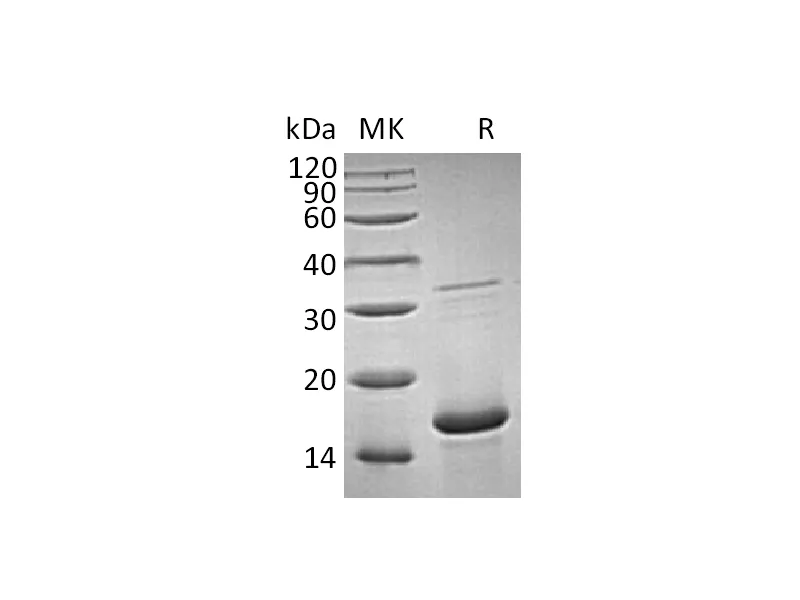
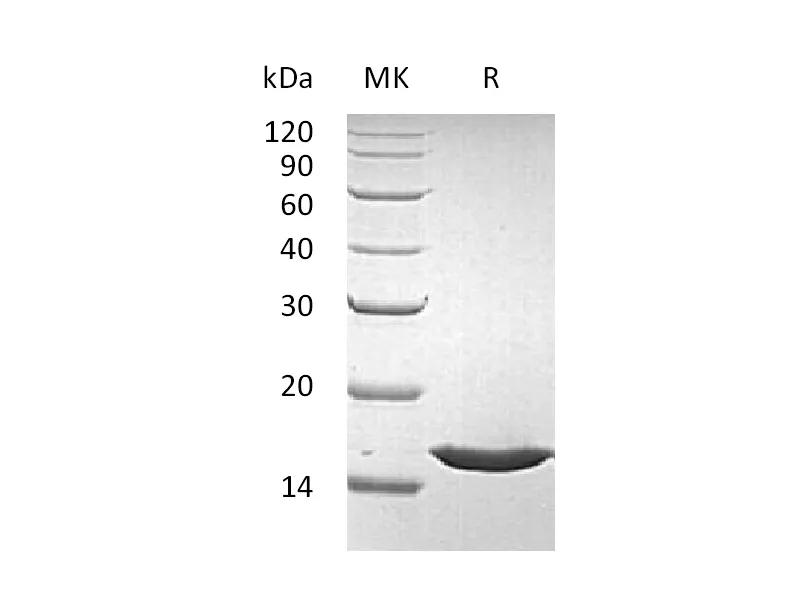
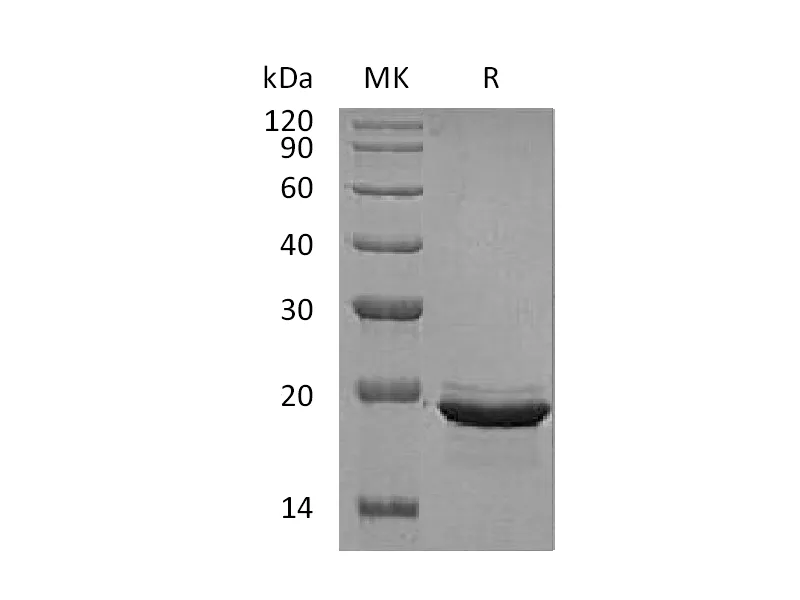
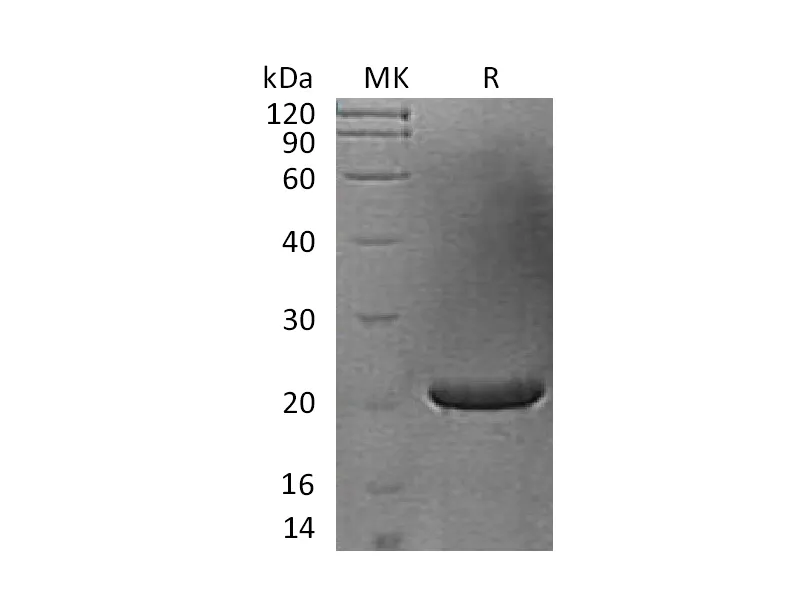
Fibroblast growth factor-9 (FGF-9) is an approximately 26 kDa secreted glycoprotein of the FGF family. Secreted mouse FGF-9 lacks the N-terminal 1-3 aa and shares //u003E98% sequence identity with rat, human, equine, porcine and bovine FGF-9. FGF-9 plays an important role in the regulation of embryonic development, cell proliferation, cell differentiation and cell migration. In the mouse embryo the location and timing of FGF-9 expression affects development of the skeleton, cerebellum, lungs, heart, vasculature, digestive tract, and testes .It may have a role in glial cell growth and differentiation during development, gliosis during repair and regeneration of brain tissue after damage, differentiation and survival of neuronal cells, and growth stimulation of glial tumors. Deletion of mouse FGF-9 is lethal at birth due to lung hypoplasia, and causes rhizomelia, or shortening of the proximal skeleton. An unusual constitutive dimerization of FGF 9 buries receptor interaction sites which lowers its activity, and increases heparin affinity which inhibits diffusion. A spontaneous mouse mutant, Eks, interferes with dimerization, resulting monomeric, diffusible FGF-9 that causes elbow and knee synostoses (joint fusions) due to FGF-9 misexpression in developing joints.
Note
For Research Use Only , Not for Diagnostic Use.