


| Name | Recombinant Human AGER (C-6His) |
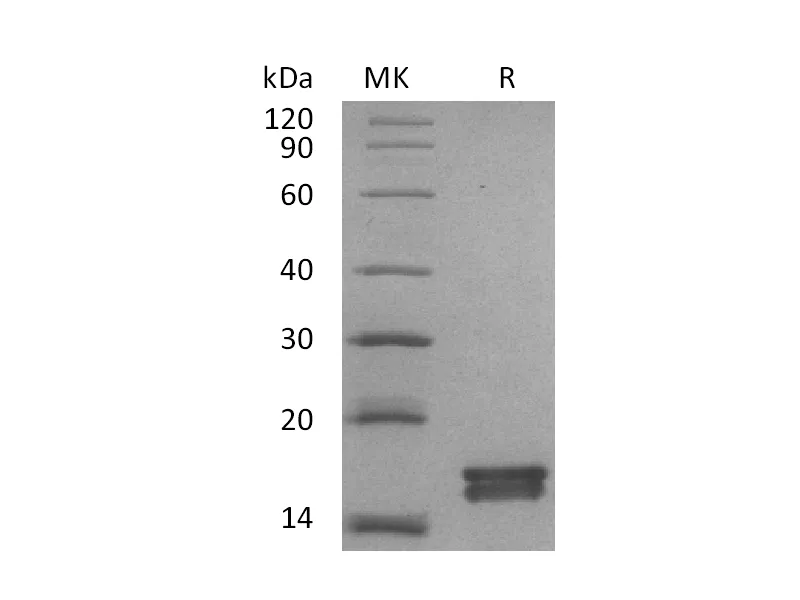
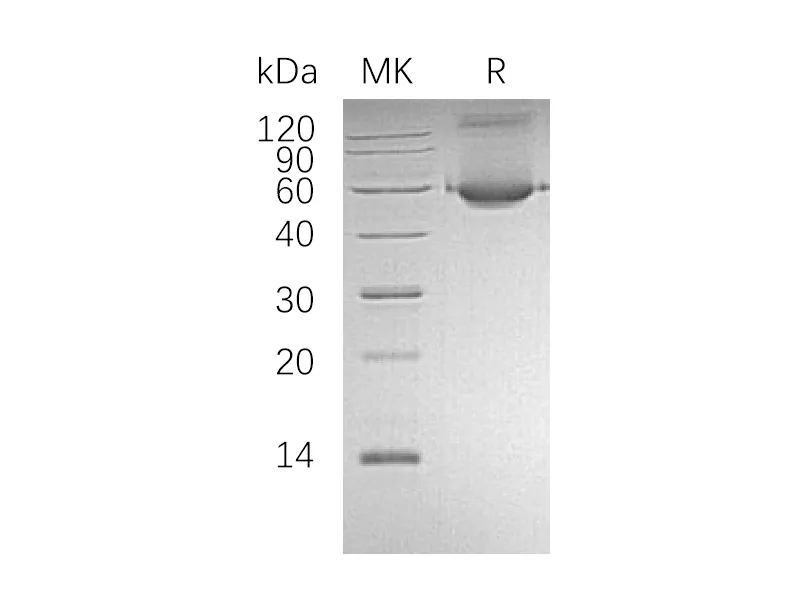
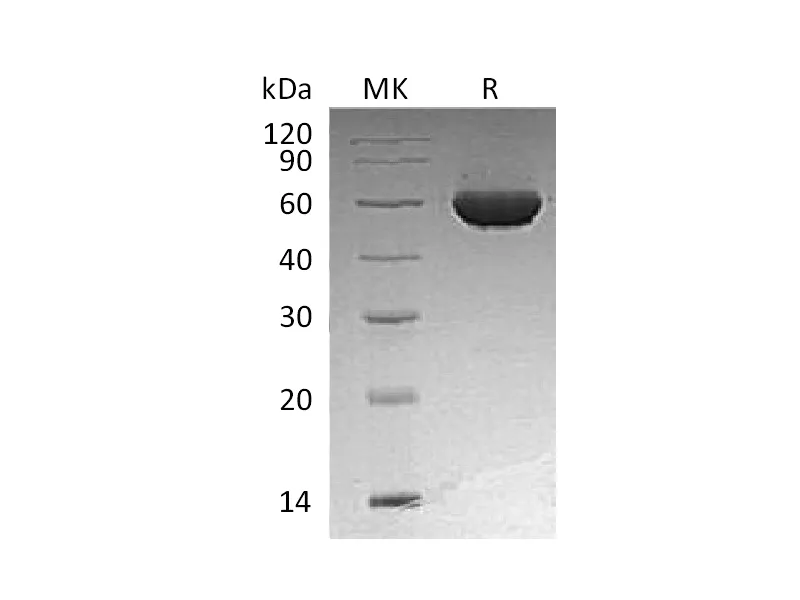
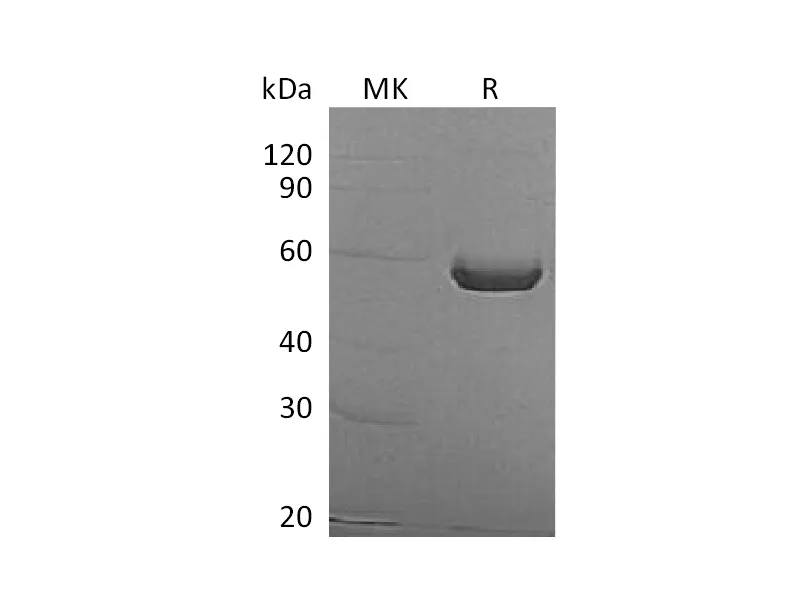
| Purity | Greater than 95% as determined by reducing SDS-PAGE |
| Endotoxin level | <1 EU/µg as determined by LAL test. |
| Construction | Recombinant Human Advanced Glycosylation End Product-Specific Receptor is produced by our Mammalian expression system and the target gene encoding Ala23-Ala344 is expressed with a 6His tag at the C-terminus. |
| Accession # | Q15109 |
| Host | Human Cells |
| Species | Human |
| Predicted Molecular Mass | 35.2 KDa |
| Buffer | Lyophilized from a 0.2 μm filtered solution of PBS, pH 7.4. |
| Form | Lyophilized |
| Shipping | The product is shipped at ambient temperature.Upon receipt, store it immediately at the temperature listed below. |
| Stability&Storage | Lyophilized protein should be stored at ≤ -20°C, stable for one year after receipt. Reconstituted protein solution can be stored at 2-8°C for 2-7 days. Aliquots of reconstituted samples are stable at ≤ -20°C for 3 months. |
| Reconstitution | Always centrifuge tubes before opening.Do not mix by vortex or pipetting.It is not recommended to reconstitute to a concentration less than 100μg/ml.Dissolve the lyophilized protein in distilled water.Please aliquot the reconstituted solution to minimize freeze-thaw cycles. |
Alternative Names
Advanced Glycosylation End Product-Specific Receptor; Receptor for Advanced Glycosylation End Products; AGER; RAGE
Background
Advanced Glycosylation End Product-Specific Receptor (AGER) belongs to the immunoglobulin superfamily of cell surface molecules. It lies within the major histocompatibility complex (MHC) class III region on chromosome 6. Besides AGEs, AGER is also able to bind other ligands which is thought to result in pro-inflammatory gene activation. It is known that AGER serve as a mediator of both acute and chronic vascular inflammation in certain conditions such as atherosclerosis and in particular as a complication of diabetes. Furthermore, it plays an important role in regulating the production/expression of TNF-alpha, oxidative stress, and endothelial dysfunction in type 2 diabetes.
Note
For Research Use Only , Not for Diagnostic Use.