

| Name | Recombinant Human GPD1 (C-6His) |
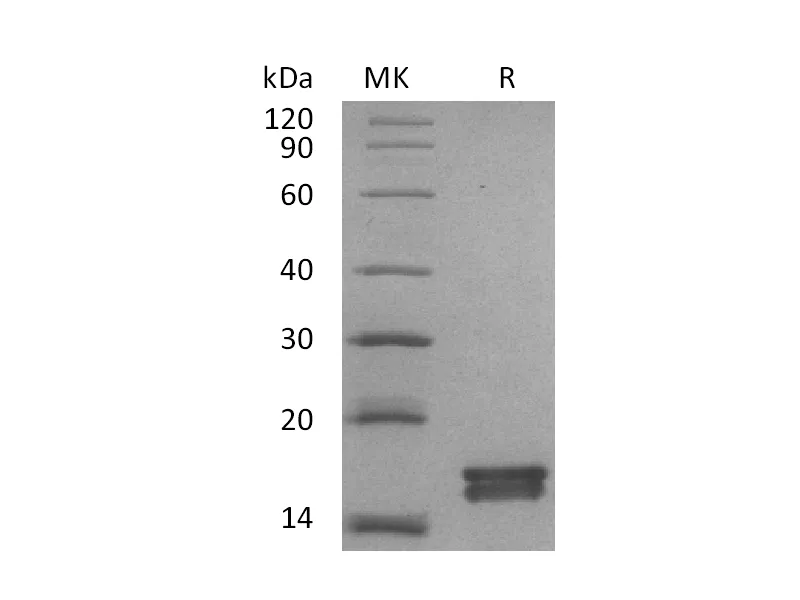
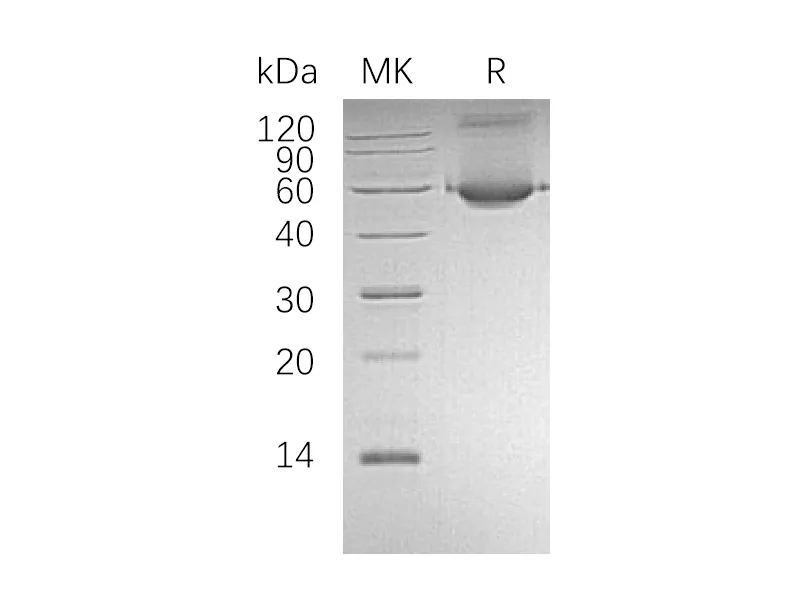
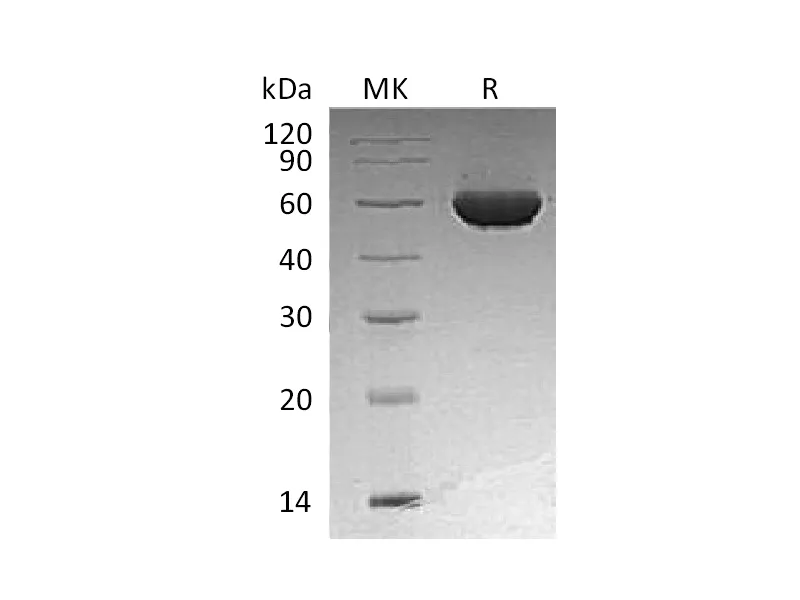
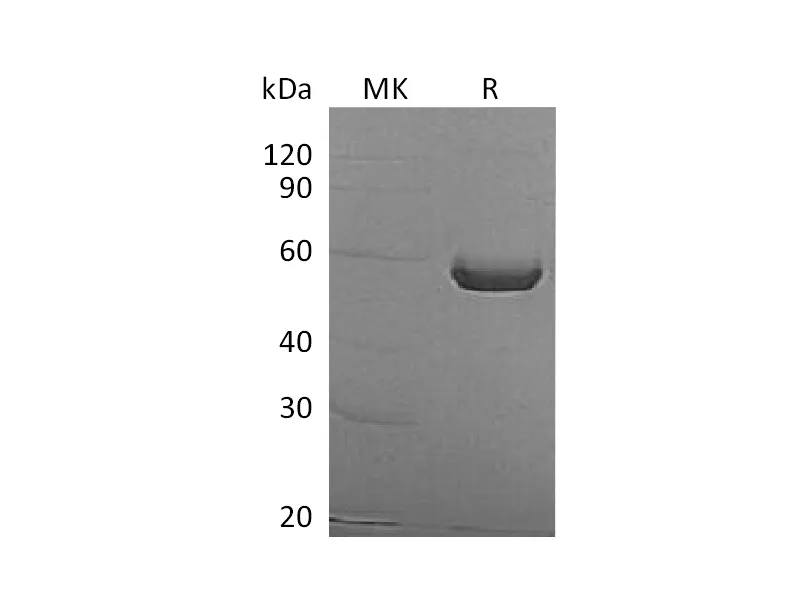
| Purity | Greater than 95% as determined by reducing SDS-PAGE |
| Endotoxin level | <1 EU/µg as determined by LAL test. |
| Construction | Recombinant Human Glycerol-3-Phosphate Dehydrogenase [NAD(+)], Cytoplasmic is produced by our Mammalian expression system and the target gene encoding Met1-Met349 is expressed with a 6His tag at the C-terminus. |
| Accession # | P21695 |
| Host | Human Cells |
| Species | Human |
| Predicted Molecular Mass | 38.6 KDa |
| Buffer | Supplied as a 0.2 μm filtered solution of 20mM Tris-HCl, 10% Glycerol, pH 8.0. |
| Form | Liquid |
| Shipping | The product is shipped on dry ice/polar packs.Upon receipt, store it immediately at the temperature listed below. |
| Stability&Storage | Store at ≤-70°C, stable for 6 months after receipt.Store at ≤-70°C, stable for 3 months under sterile conditions after opening. Please minimize freeze-thaw cycles. |
Alternative Names
Glycerol-3-Phosphate Dehydrogenase [NAD(+)] Cytoplasmic; GPD-C; GPDH-C; GPD1
Background
Glycerol-3-Phosphate Dehydrogenase [NAD(+, Cytoplasmic (GPDH-C) belongs to the NAD-Dependent Glycerol-3-Phosphate Dehydrogenase family. GPDH-C plays a critical role in carbohydrate and lipid metabolism by catalyzing the reversible conversion of Dihydroxyacetone Phosphate (DHAP) and reducing Nicotine Adenine Dinucleotide (NADH) to Glycerol-3-Phosphate (G3P) and NAD+. GPDH-C is inhibited by zinc ions and sulfate. Mutations in this gene are a cause of transient infantile hypertriglyceridemia. GPDH-C is unlike Glyceraldehyde 3-Phosphate Dehydrogenase (GAPDH); they have different substrates.
Note
For Research Use Only , Not for Diagnostic Use.