


| Name | Recombinant Human ARG1 (C-6His) |
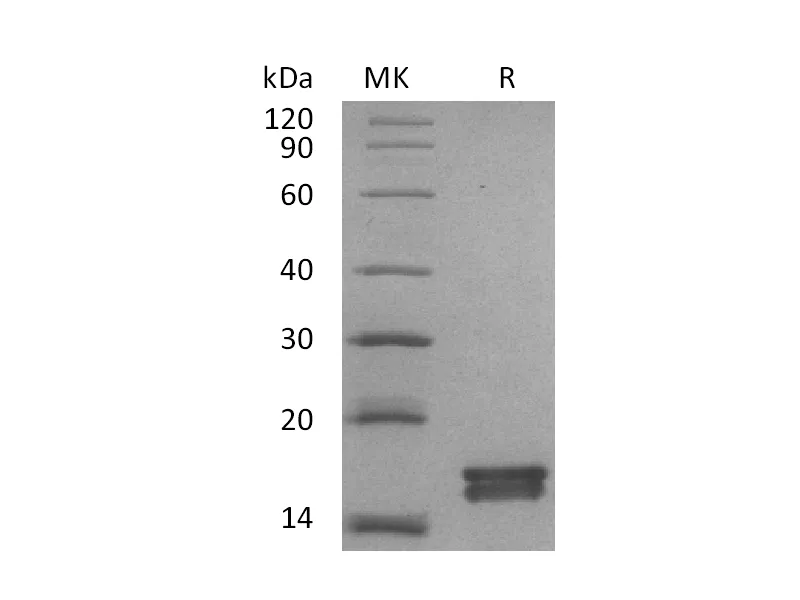
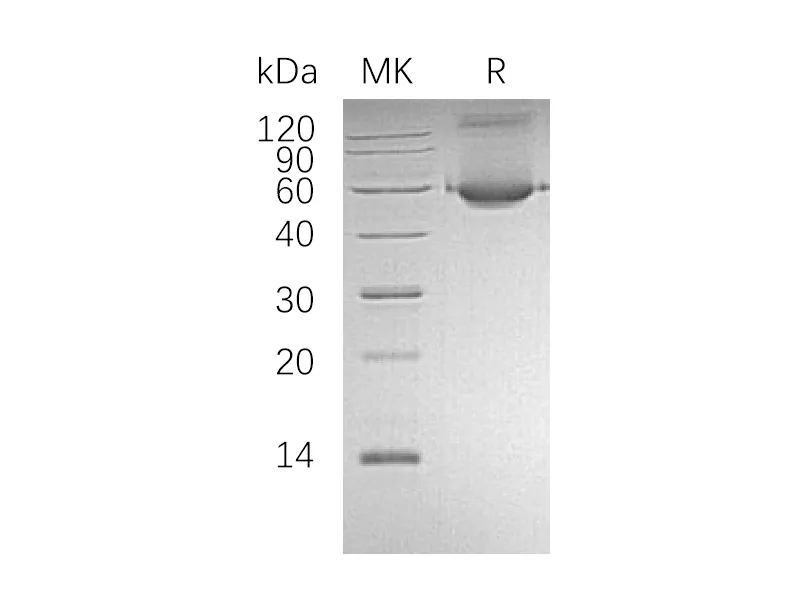
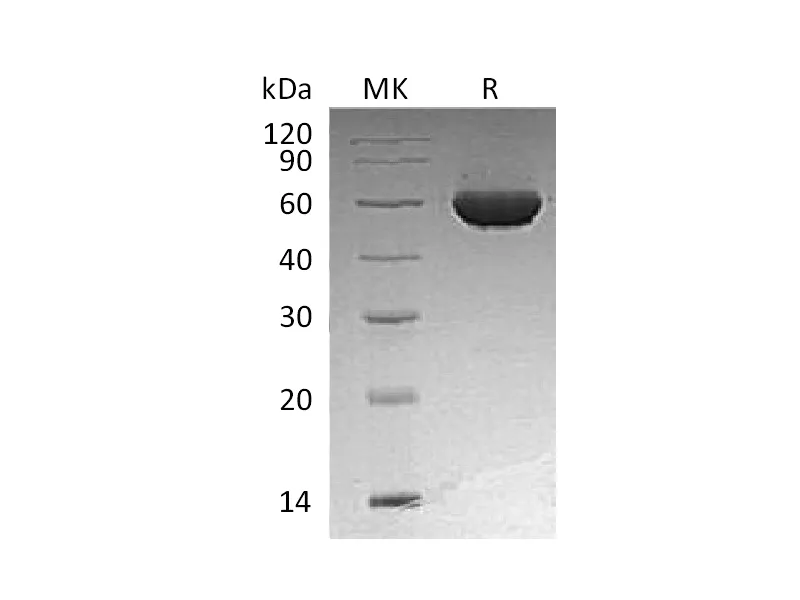
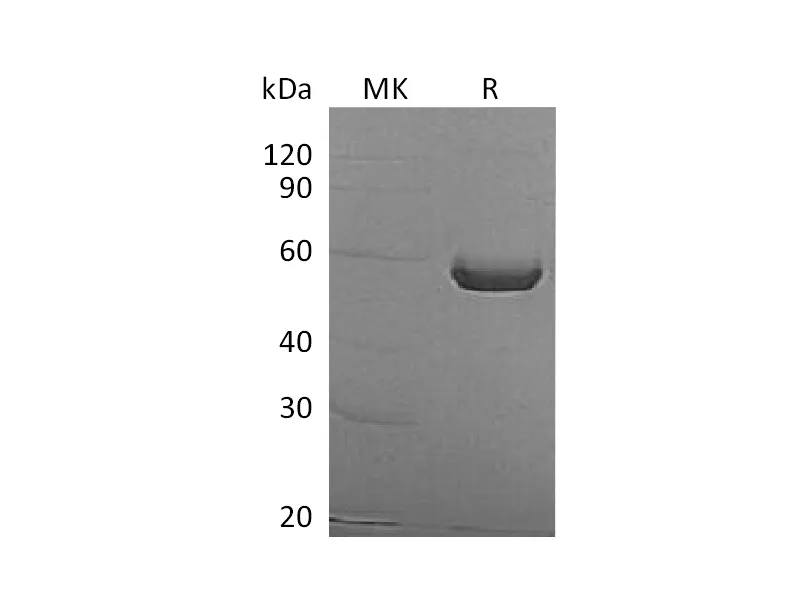
| Purity | Greater than 95% as determined by reducing SDS-PAGE |
| Endotoxin level | <1 EU/µg as determined by LAL test. |
| Construction | Recombinant Human Arginase-1 is produced by our Mammalian expression system and the target gene encoding Met1-Lys322 is expressed with a 6His tag at the C-terminus. |
| Accession # | P05089 |
| Host | Human Cells |
| Species | Human |
| Predicted Molecular Mass | 35.6 KDa |
| Buffer | Supplied as a 0.2 μm filtered solution of 20mM Tris-HCl, 150mM NaCl, 20% Glycerol, 1mM DTT, pH 7.4. |
| Form | Liquid |
| Shipping | The product is shipped on dry ice/polar packs.Upon receipt, store it immediately at the temperature listed below. |
| Stability&Storage | Store at ≤-70°C, stable for 6 months after receipt.Store at ≤-70°C, stable for 3 months under sterile conditions after opening. Please minimize freeze-thaw cycles. |
Alternative Names
Arginase-1; Liver-type arginase; Type I arginase; ARG1
Background
ARG1 is a member of the ureohydrolase family of enzymes. ARG1 can catalyze the hydrolysis of arginine to ornithine and urea. In the urea cycle, ARG1 catalyzes the fifth and final step, a series of biochemical reactions in mammals during which the body disposes of harmful ammonia. ARG1 is a cytosolic enzyme and expressed widely in the liver as part of the urea cycle, while it is also expressed in cells and tissues that lack a complete urea cycle, including lung. Inherited deficiency of this ARG1 causes argininemia, which is an autosomal recessive disorder characterized by hyperammonemia.
Note
For Research Use Only , Not for Diagnostic Use.