

| Name | Recombinant Human CD68 (C-Fc) |
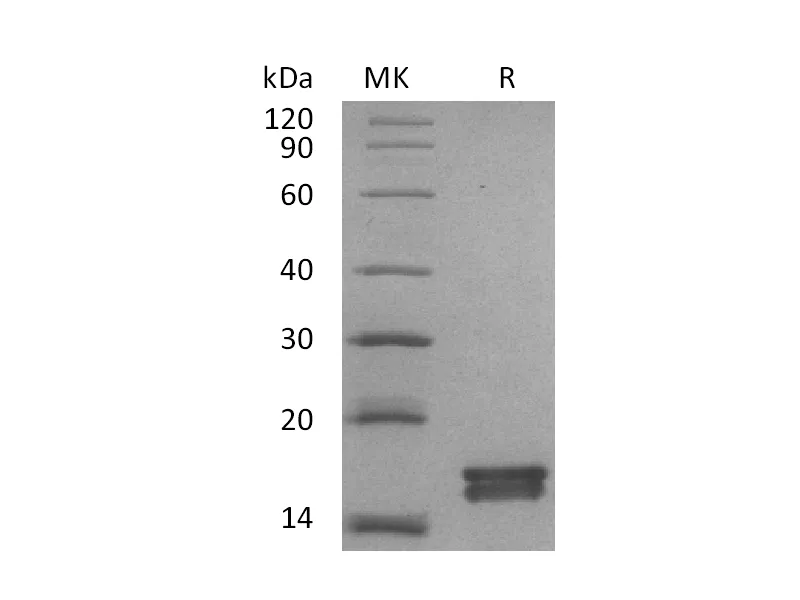
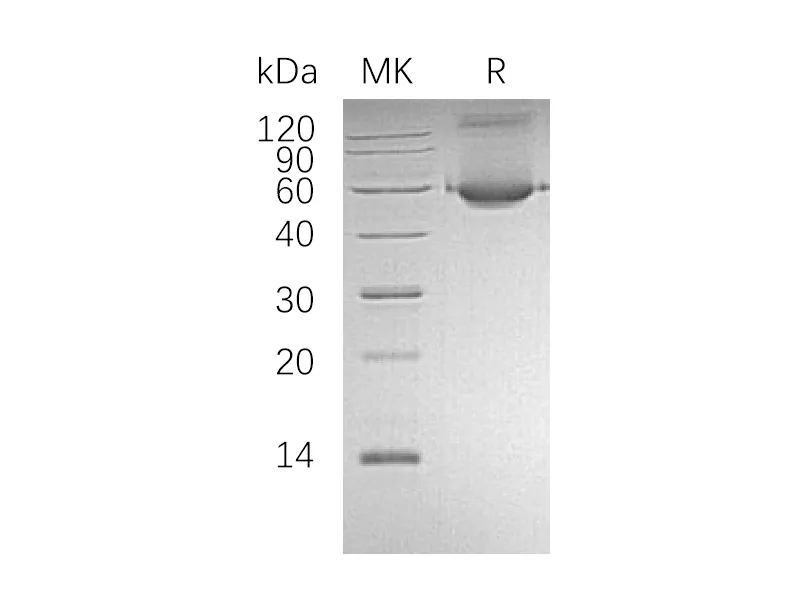
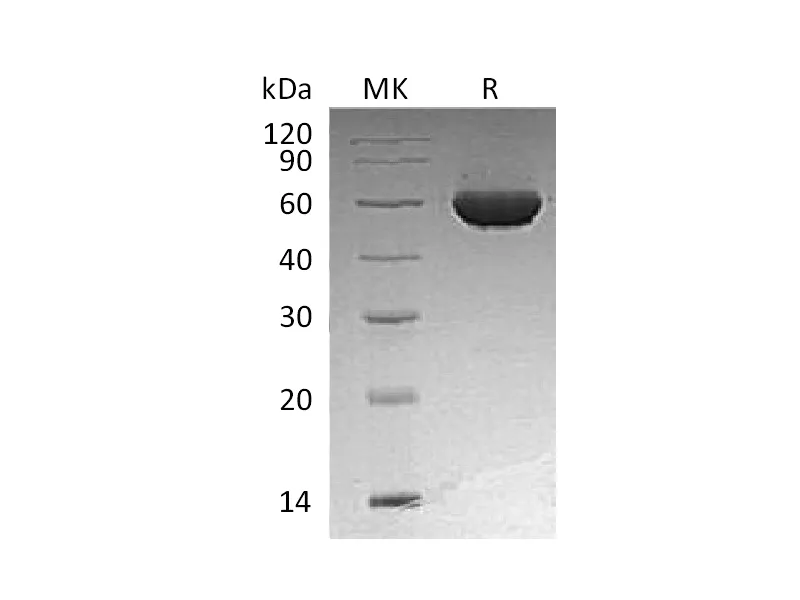
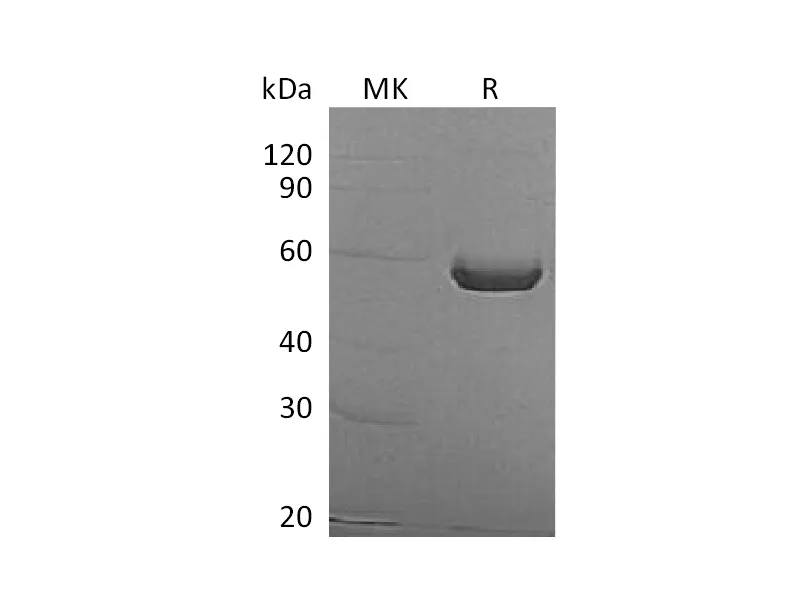
| Purity | Greater than 95% as determined by reducing SDS-PAGE |
| Endotoxin level | <1 EU/µg as determined by LAL test. |
| Construction | Recombinant Human Macrosialin is produced by our Mammalian expression system and the target gene encoding Asn22-Ile320 is expressed with a human IgG1 Fc tag at the C-terminus. |
| Accession # | P34810 |
| Host | Human Cells |
| Species | Human |
| Predicted Molecular Mass | 58.5 KDa |
| Buffer | Lyophilized from a 0.2 μm filtered solution of PBS, pH 7.4. |
| Form | Lyophilized |
| Shipping | The product is shipped at ambient temperature.Upon receipt, store it immediately at the temperature listed below. |
| Stability&Storage | Store at ≤-70°C, stable for 6 months after receipt.Store at ≤-70°C, stable for 3 months under sterile conditions after opening. Please minimize freeze-thaw cycles. |
| Reconstitution | Always centrifuge tubes before opening.Do not mix by vortex or pipetting.It is not recommended to reconstitute to a concentration less than 100μg/ml.Dissolve the lyophilized protein in distilled water.Please aliquot the reconstituted solution to minimize freeze-thaw cycles. |
Alternative Names
CD68 antigenmacrophage antigen CD68; CD68 molecule; CD68; gp110; Macrosialin; SCARD1; SRD1; SR-D1
Background
CD68, also called Scavenger Receptor D1 (SR-D1) and LAMP-4, is a heavily glycosylated type I transmembrane glycoprotein that belongs to the LAMP family. CD68 is expressed in many tumor cell lines which could allow them to attach to selectins on vascular endothelium, facilitating their dissemination to secondary sites. CD68 plays a role in phagocytic activities of tissue macrophages, both in intracellular lysosomal metabolism and extracellular cell-cell and cell-pathogen interactions. It is a commonly used marker for macrophages. CD68 is also a biomarker of rheumatoid arthritis and Hodgkins lymphoma. CD68 influences the functions of cells through NF-kB/focal adhesion kinase pathway (7). In addition, CD68 on macrophages binds tightly to both S100A8 and S100A9 to enhance the cell immunity.
Note
For Research Use Only , Not for Diagnostic Use.