


| Name | Recombinant Human G-CSFR (C-Fc) |
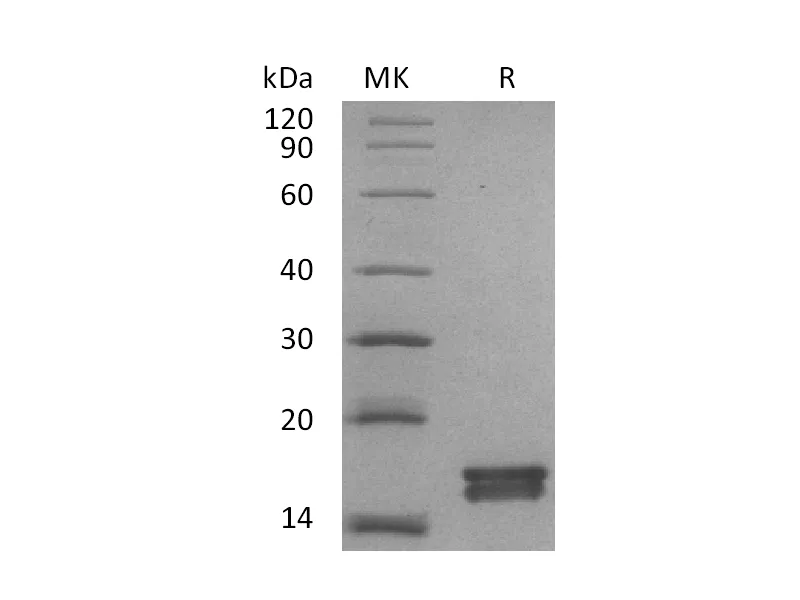
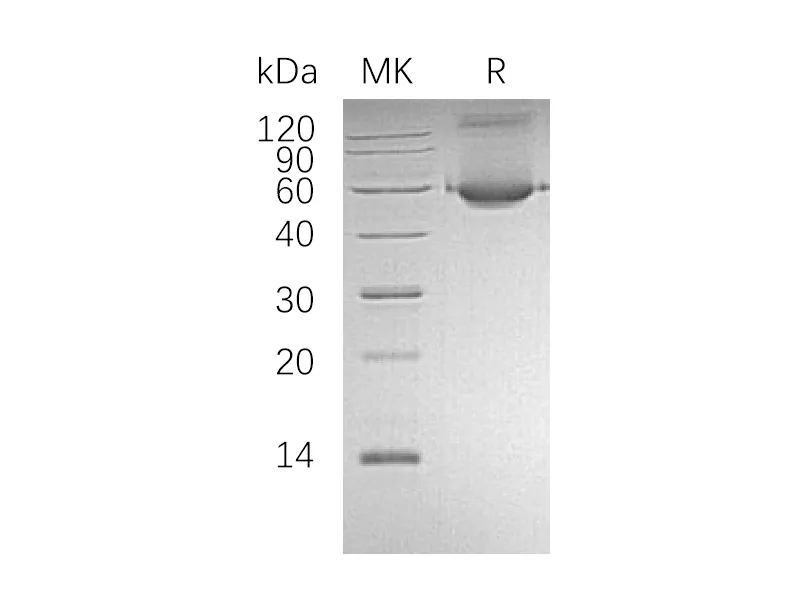
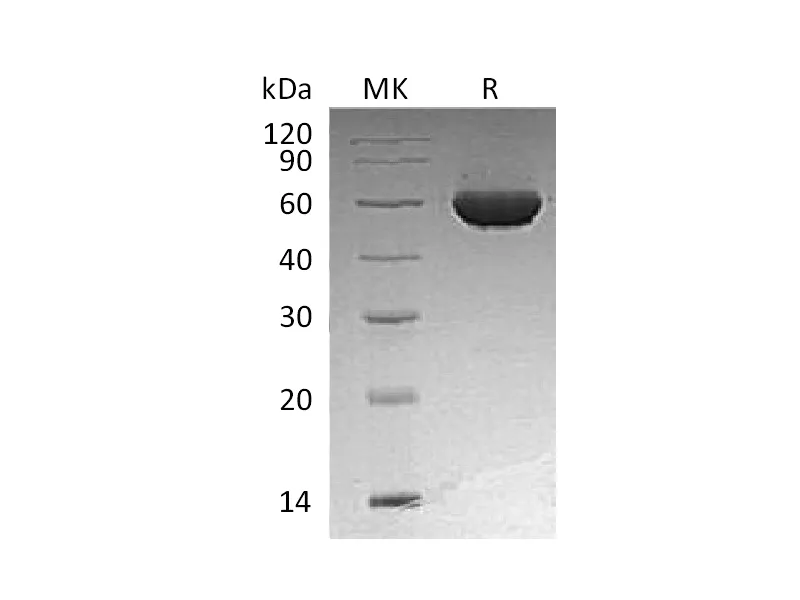
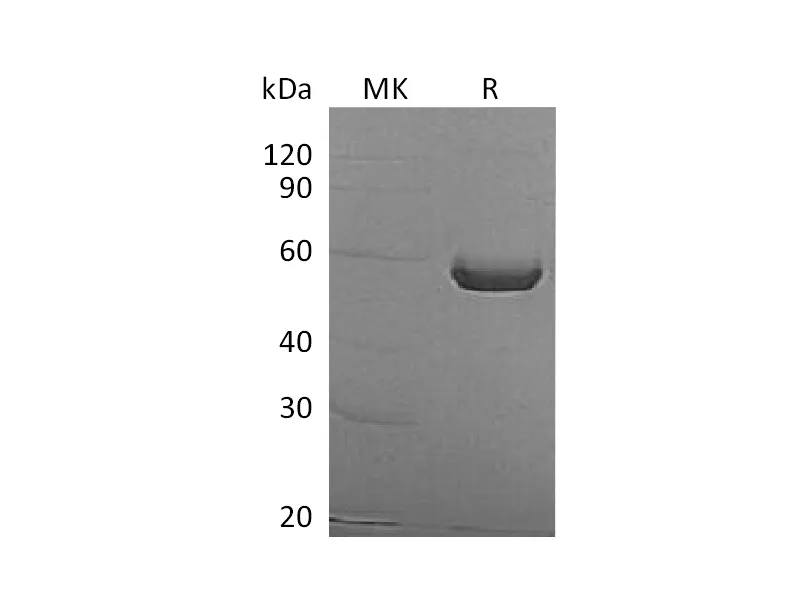
| Purity | Greater than 95% as determined by reducing SDS-PAGE |
| Endotoxin level | <1 EU/µg as determined by LAL test. |
| Construction | Recombinant Human Granulocyte Colony-stimulating Factor Receptor is produced by our Mammalian expression system and the target gene encoding Glu25-His627 is expressed with a human IgG1 Fc tag at the C-terminus. |
| Accession # | Q99062 |
| Host | Human Cells |
| Species | Human |
| Predicted Molecular Mass | 93.7 KDa |
| Buffer | Lyophilized from a 0.2 μm filtered solution of PBS, pH 7.4. |
| Form | Lyophilized |
| Shipping | The product is shipped at ambient temperature.Upon receipt, store it immediately at the temperature listed below. |
| Stability&Storage | Store at ≤-70°C, stable for 6 months after receipt.Store at ≤-70°C, stable for 3 months under sterile conditions after opening. Please minimize freeze-thaw cycles. |
| Reconstitution | Always centrifuge tubes before opening.Do not mix by vortex or pipetting.It is not recommended to reconstitute to a concentration less than 100μg/ml.Dissolve the lyophilized protein in distilled water.Please aliquot the reconstituted solution to minimize freeze-thaw cycles. |
Alternative Names
CD114 antigen; CD114; colony stimulating factor 3 receptor (granulocyte); CSF3R; Csfgr; G-CSF R; G-CSF receptor; GCSFR; G-CSFR; GCSFRG-CSF-R
Background
Granulocyte Colony Stimulating Factor Receptor (G-CSFR), also known as CD114, the protein encoded by this gene is the receptor for colony stimulating factor 3, a cytokine that controls the production, differentiation, and function of granulocytes. The encoded protein, which is a member of the family of cytokine receptors, may also function in some cell surface adhesion or recognition processes. Mutations in the G-CSF receptor leading to carboxy-terminal truncation transduce hyperproliferative growth responses, and are implicated in the pathological progression of severe congenital neutropenia (SCN) to acute myelogenous leukemia (AML). Additionally, autocrine/paracrine stimulation of G-CSFR may be important in the biology of solid tumors, including metastasis.
Note
For Research Use Only , Not for Diagnostic Use.