


| Name | Recombinant S. cerevisiae TIM14 |
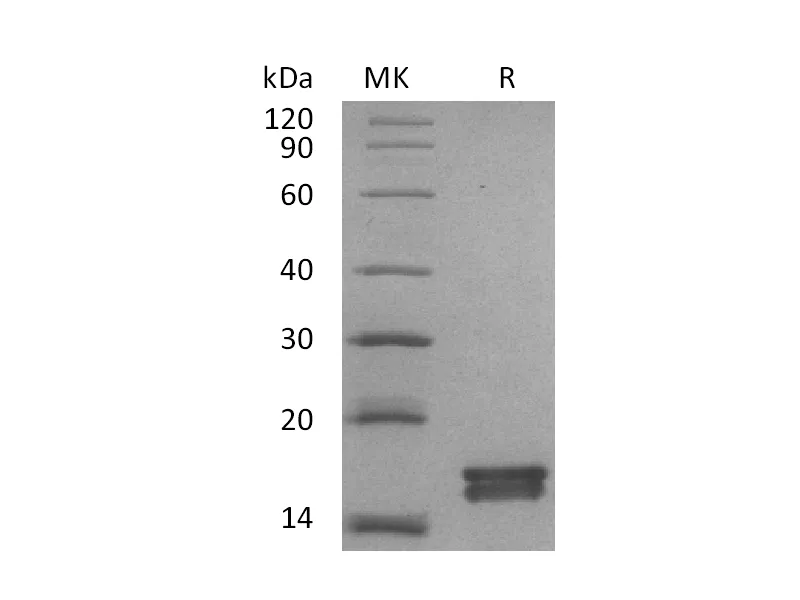
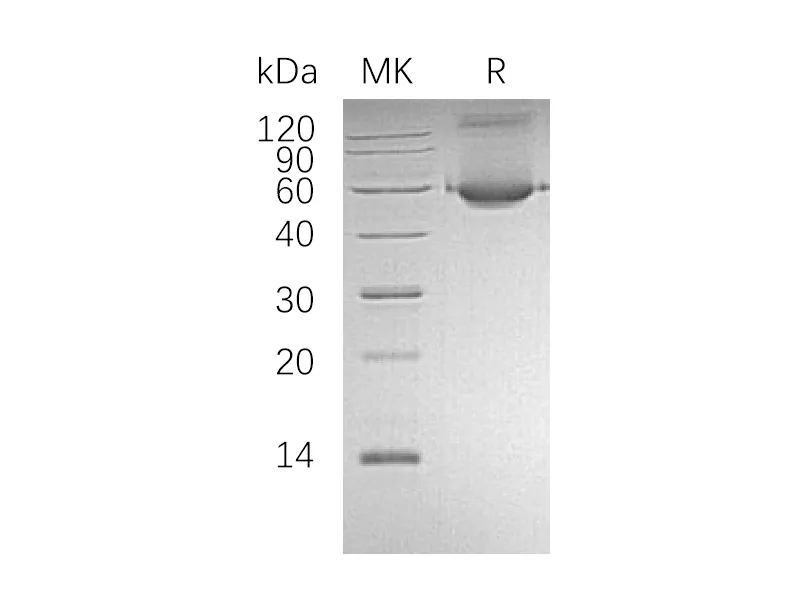
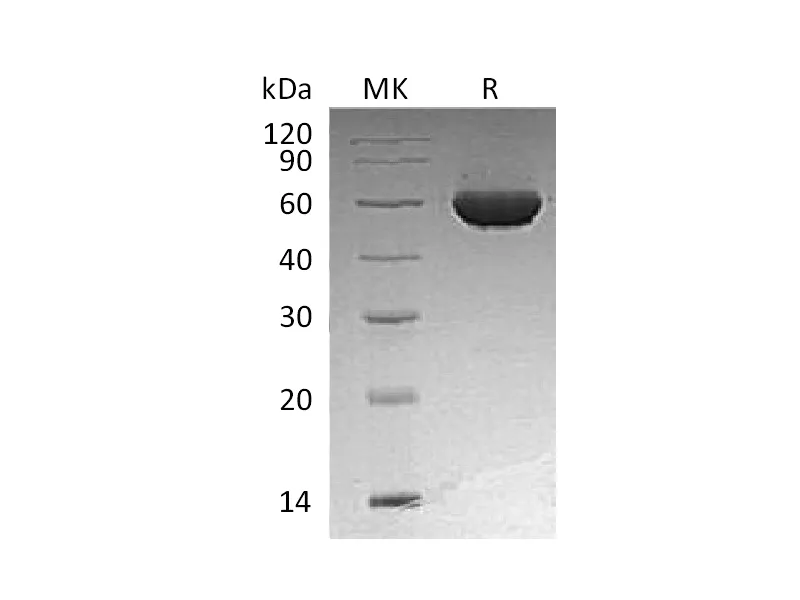
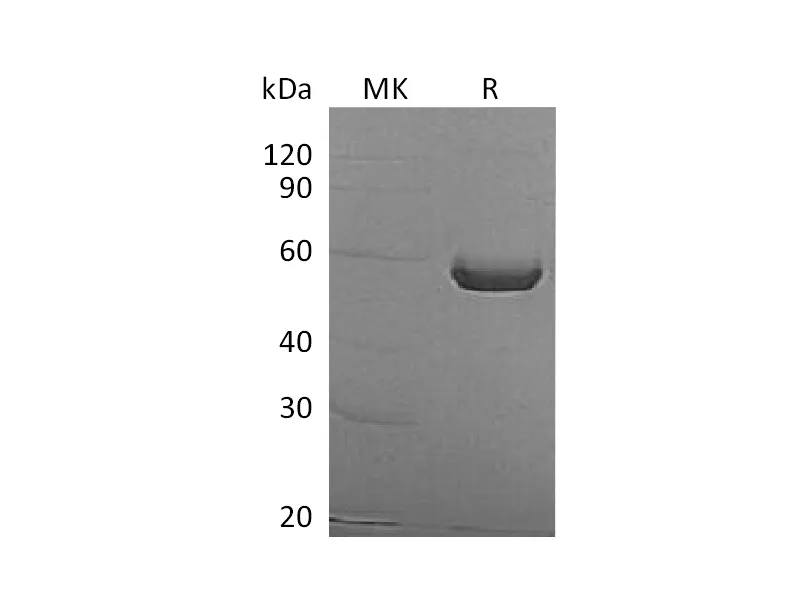
| Purity | Greater than 95% as determined by reducing SDS-PAGE |
| Endotoxin level | <1 EU/µg as determined by LAL test. |
| Construction | Recombinant S. cerevisiae Mitochondrial Import Inner Membrane Translocase Subunit TIM14 is produced by our E.coli expression system and the target gene encoding Phe99-Lys168 is expressed. |
| Accession # | Q07914 |
| Host | E.coli |
| Species | S. cerevisiae |
| Predicted Molecular Mass | 7.9 KDa |
| Buffer | Lyophilized from a 0.2 μm filtered solution of 20mM Tris-HCl, 300mM NaCl, pH 8.0. |
| Form | Lyophilized |
| Shipping | The product is shipped at ambient temperature.Upon receipt, store it immediately at the temperature listed below. |
| Stability&Storage | Store at ≤-70°C, stable for 6 months after receipt.Store at ≤-70°C, stable for 3 months under sterile conditions after opening. Please minimize freeze-thaw cycles. |
| Reconstitution | Always centrifuge tubes before opening.Do not mix by vortex or pipetting.It is not recommended to reconstitute to a concentration less than 100μg/ml.Dissolve the lyophilized protein in distilled water.Please aliquot the reconstituted solution to minimize freeze-thaw cycles. |
Alternative Names
Mitochondrial import inner membrane translocase subunit TIM14; Presequencetranslocated-associated motor subunit PAM18; PAM18; TIM14
Background
Mitochondrial import inner membrane translocase subunit TIM14 (TIM14) is an essential component of the PAM complex. PAM complex is required for the translocation of transit peptide-containing proteins from the inner membrane into the mitochondrial matrix in an ATP-dependent manner. In the complex, TIM14 is required to stimulate activity of mtHSP70 (SSC1). TIM14 belongs to the DnaJ family, which has been involved in Hsp40/Hsp70 chaperone systems. As a mitochondrial chaperone, TIM14 functions as part of the TIM23 complex import motor to facilitate the import of nuclear-encoded proteins into the mitochondria. TIM14 also complexes with prohibitin complexes to regulate mitochondrial morphogenesis, and has been implicated in dilated cardiomyopathy with ataxia.
Note
For Research Use Only , Not for Diagnostic Use.