


| Name | Recombinant Human NPTN (C-6His) |
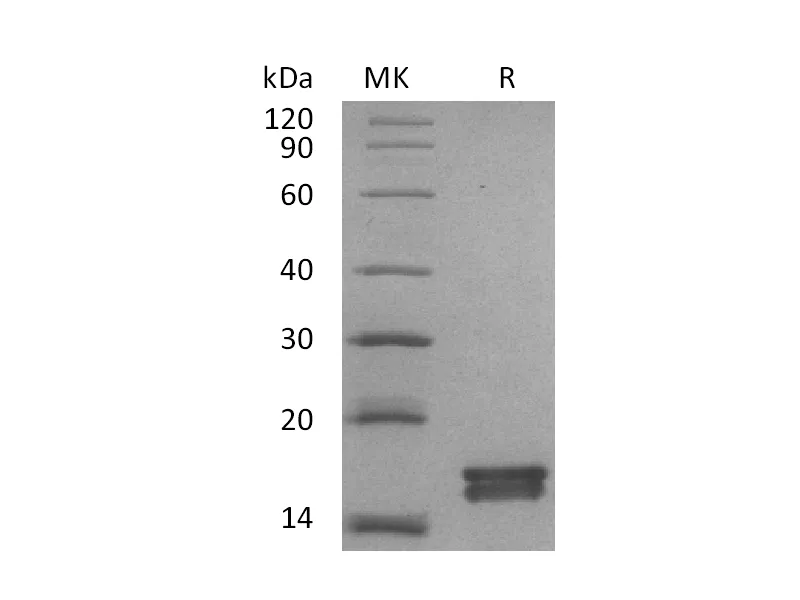
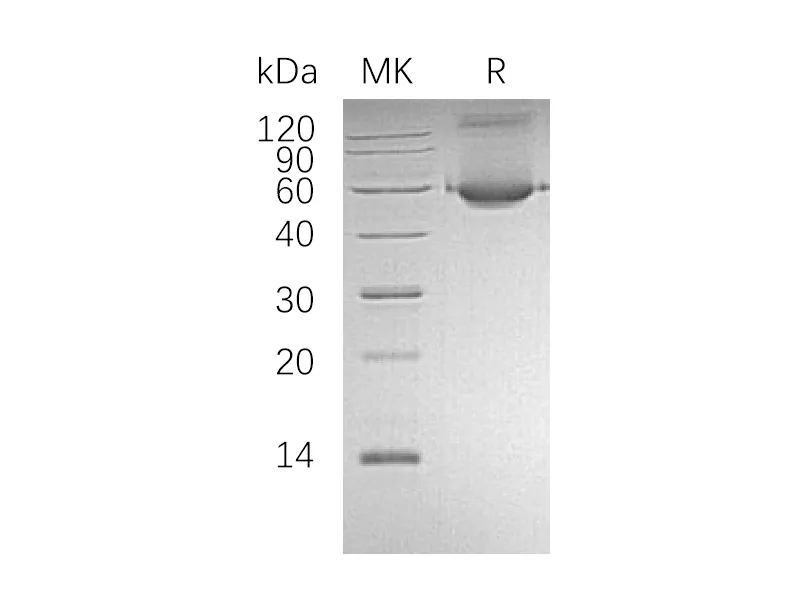
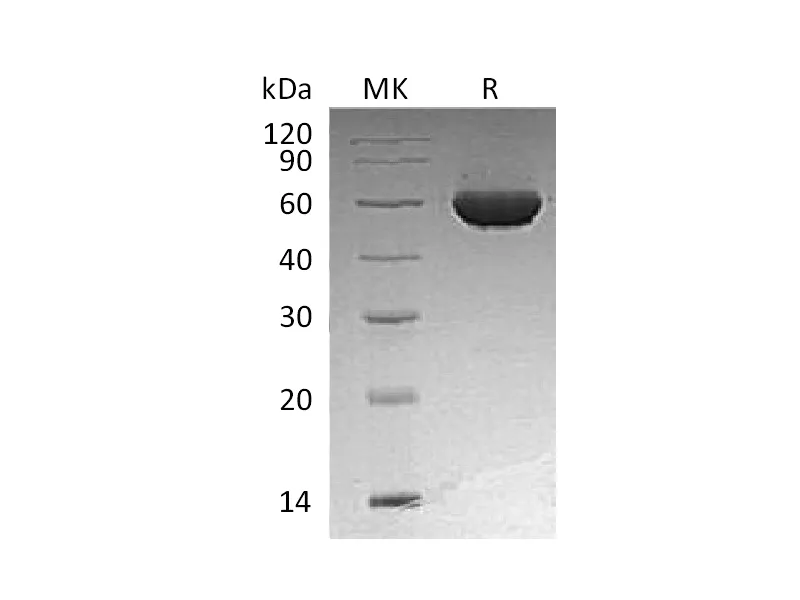
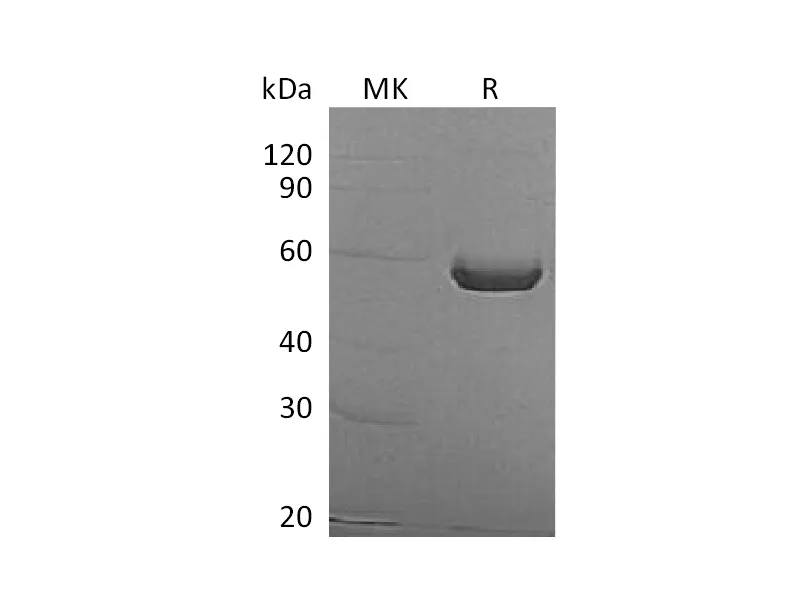
| Purity | Greater than 95% as determined by reducing SDS-PAGE |
| Endotoxin level | <1 EU/µg as determined by LAL test. |
| Construction | Recombinant Human Neuroplastin is produced by our Mammalian expression system and the target gene encoding Gln29-His220 is expressed with a 6His tag at the C-terminus. |
| Accession # | Q9Y639 |
| Host | Human Cells |
| Species | Human |
| Predicted Molecular Mass | 22.69 KDa |
| Buffer | Lyophilized from a 0.2 μm filtered solution of 20mM PB, 150mM NaCl, pH 7.2. |
| Form | Lyophilized |
| Shipping | The product is shipped at ambient temperature.Upon receipt, store it immediately at the temperature listed below. |
| Stability&Storage | Store at ≤-70°C, stable for 6 months after receipt.Store at ≤-70°C, stable for 3 months under sterile conditions after opening. Please minimize freeze-thaw cycles. |
| Reconstitution | Always centrifuge tubes before opening.Do not mix by vortex or pipetting.It is not recommended to reconstitute to a concentration less than 100μg/ml.Dissolve the lyophilized protein in distilled water.Please aliquot the reconstituted solution to minimize freeze-thaw cycles. |
Alternative Names
Neuroplastin; Stromal Cell-Derived Receptor 1; SDR-1; NPTN; SDFR1; SDR1
Background
Neuroplastin (NPTN) is a 52-57 kDa member of the Ig-superfamily. Neuroplastin likely serves as a cell adhesion molecule, and is widely expressed in multiple tissues. Human Neuroplastin is 282 amino acids that contions two Ig-like domains and a 38 aa cytoplasmic region. Probable homophilic and heterophilic cell adhesion molecule involved in long term potentiation at hippocampal excitatory synapses through activation of p38MAPK. Neuroplastin may also regulate neurite outgrowth by activating the FGFR1 signaling pathway. It may play a role in synaptic plasticity.
Note
For Research Use Only , Not for Diagnostic Use.