


| Name | Recombinant Mouse CES3 (C-6His) |
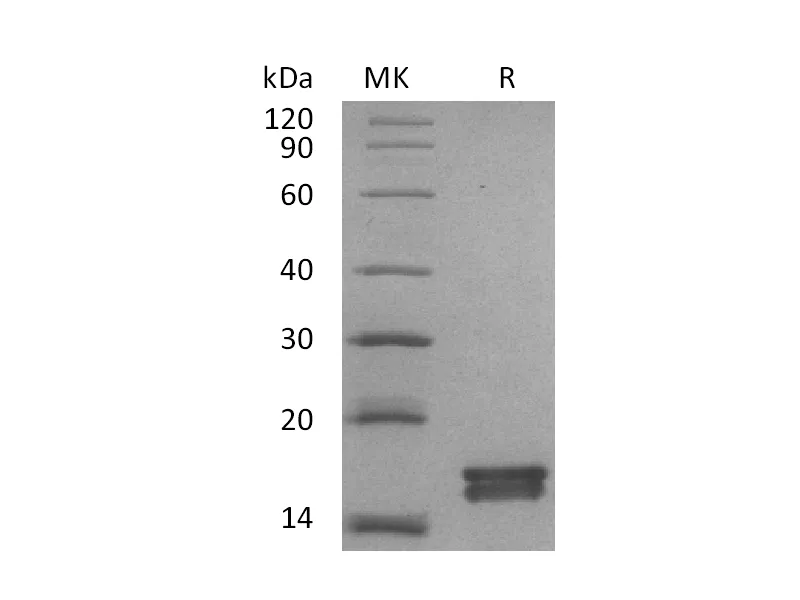
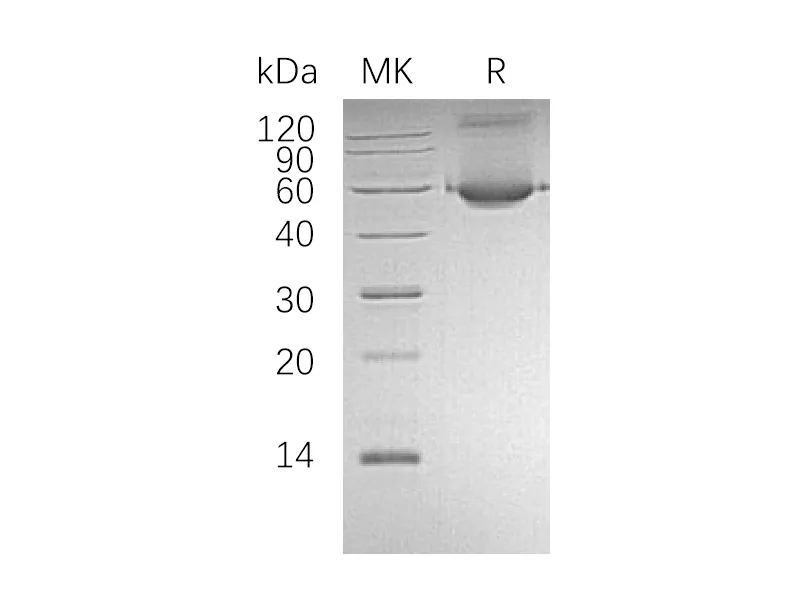
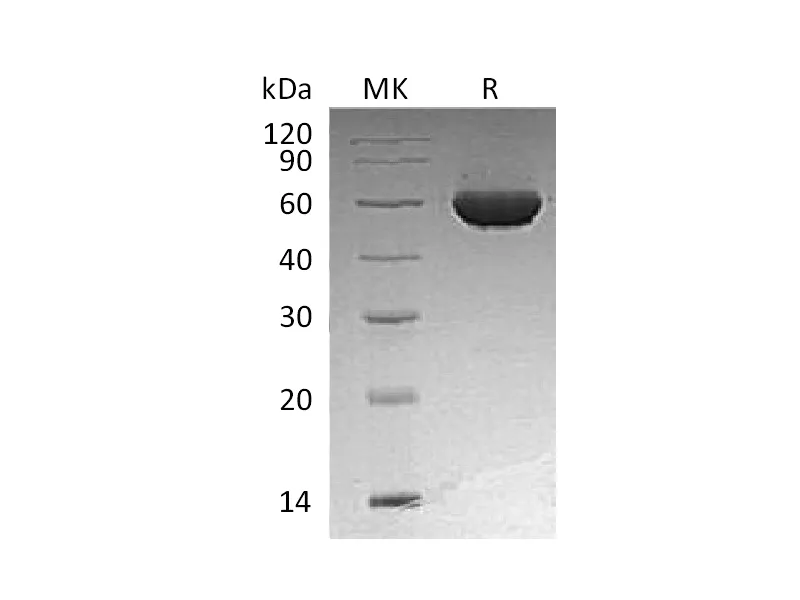
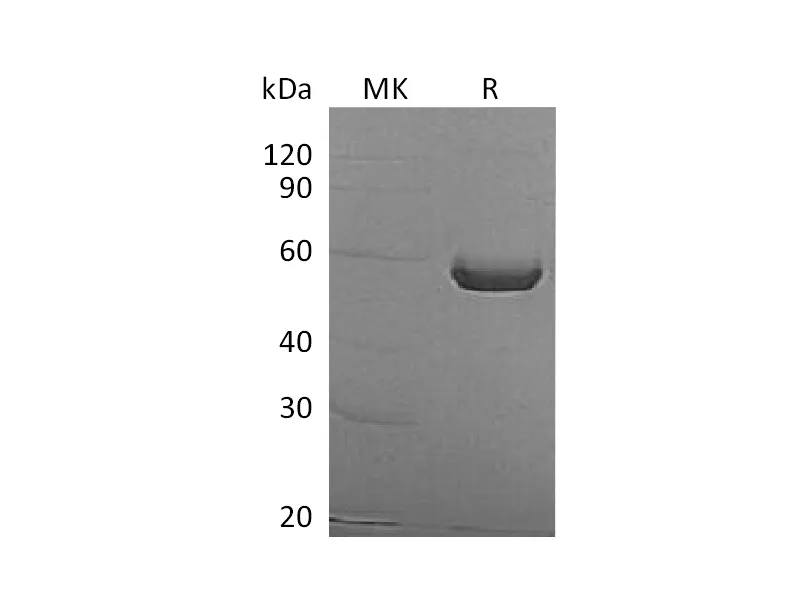
| Purity | Greater than 95% as determined by reducing SDS-PAGE |
| Endotoxin level | <1 EU/µg as determined by LAL test. |
| Construction | Recombinant Mouse Carboxylesterase 3 is produced by our Mammalian expression system and the target gene encoding Tyr19-Glu561 is expressed with a 6His tag at the C-terminus. |
| Accession # | Q8VCT4 |
| Host | Human Cells |
| Species | Mouse |
| Predicted Molecular Mass | 62.4 KDa |
| Buffer | Lyophilized from a 0.2 μm filtered solution of 20mM Tris-HCl, 150mM NaCl, pH 8.0. |
| Form | Lyophilized |
| Shipping | The product is shipped at ambient temperature.Upon receipt, store it immediately at the temperature listed below. |
| Stability&Storage | Store at ≤-70°C, stable for 6 months after receipt.Store at ≤-70°C, stable for 3 months under sterile conditions after opening. Please minimize freeze-thaw cycles. |
| Reconstitution | Always centrifuge tubes before opening.Do not mix by vortex or pipetting.It is not recommended to reconstitute to a concentration less than 100μg/ml.Dissolve the lyophilized protein in distilled water.Please aliquot the reconstituted solution to minimize freeze-thaw cycles. |
Alternative Names
CES3; carboxylesterase 3; carboxylesterase 3 (brain); EC 3.1.1; EC 3.1.1.1; ES31FLJ21736; Esterase 31; Liver carboxylesterase 31 homolog
Background
Mouse Carboxylesterases 3 (CES3) is a member of five families of mammalian carboxylesterases that plays a role in catalyzing hydrolytic and transesterification reactions with xenobiotics, anticancer pro-drugs and narcotics, and detoxifying organophosphates and insecticides. Mammalian carboxylesterases are enzymes with broad substrate specificities ranging from small molecule esters to longchain fatty acid esters. It is shown that CESs has key roles in the metabolism of a wide variety of clinical drugs, illicit narcotics and chemical nerve agents. CES3 is broadly expressed in liver, colon and brain.
Note
For Research Use Only , Not for Diagnostic Use.