


| Name | Recombinant Human CD55 (C-6His) |
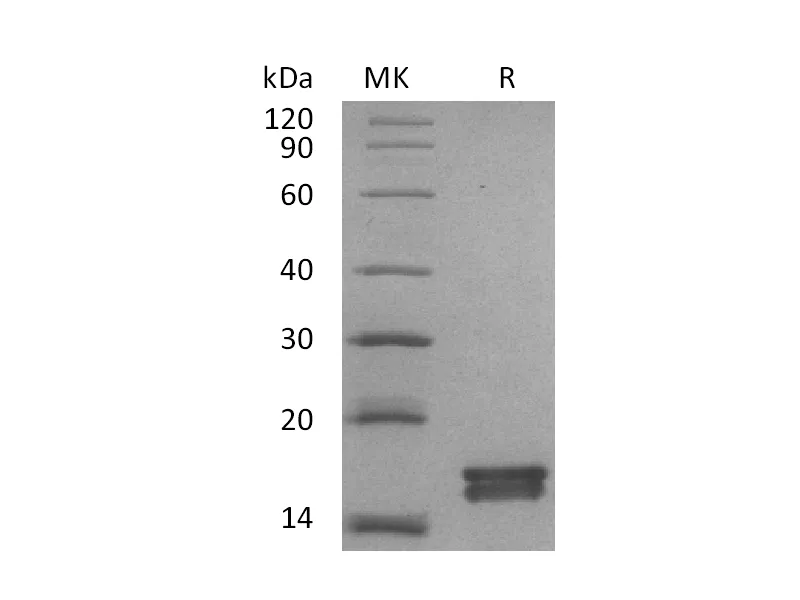
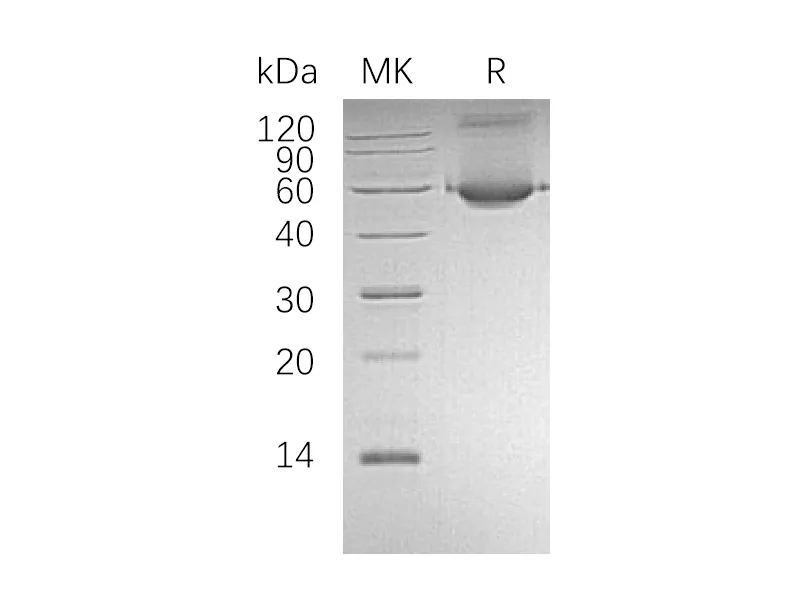
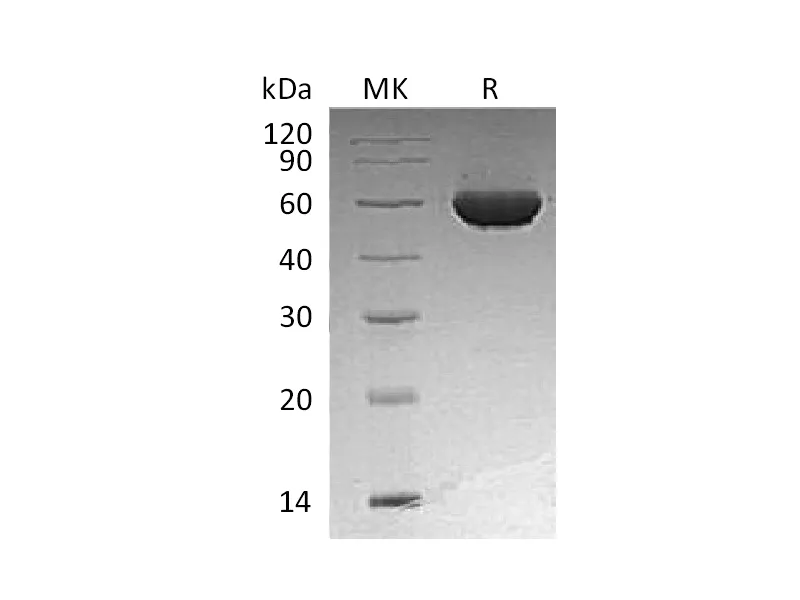
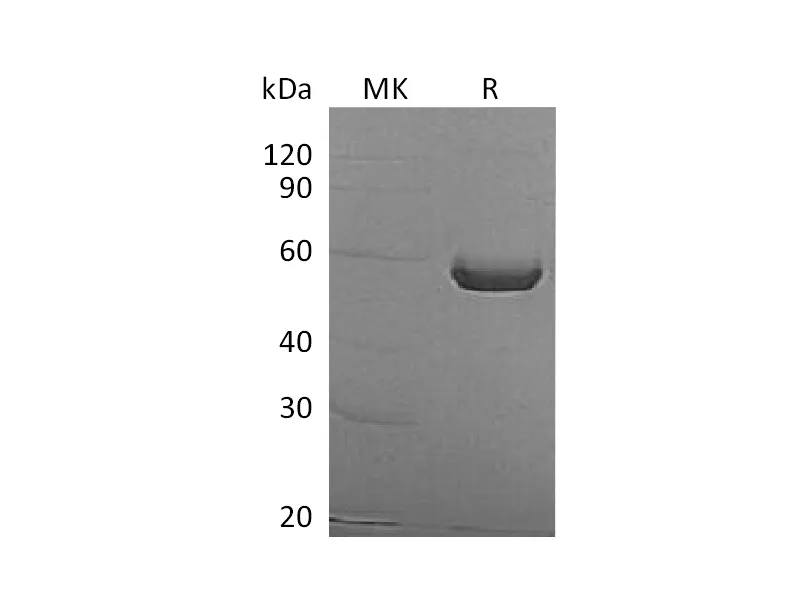
| Purity | Greater than 95% as determined by reducing SDS-PAGE |
| Endotoxin level | <1 EU/µg as determined by LAL test. |
| Construction | Recombinant Human CD55 is produced by our Mammalian expression system and the target gene encoding Asp35-Ser353 is expressed with a 6His tag at the C-terminus. |
| Accession # | P08174 |
| Host | Human Cells |
| Species | Human |
| Predicted Molecular Mass | 36 KDa |
| Buffer | Lyophilized from a 0.2 μm filtered solution of 20mM PB, 150mM NaCl, pH 7.4. |
| Form | Lyophilized |
| Shipping | The product is shipped at ambient temperature.Upon receipt, store it immediately at the temperature listed below. |
| Stability&Storage | Store at ≤-70°C, stable for 6 months after receipt.Store at ≤-70°C, stable for 3 months under sterile conditions after opening. Please minimize freeze-thaw cycles. |
| Reconstitution | Always centrifuge tubes before opening.Do not mix by vortex or pipetting.It is not recommended to reconstitute to a concentration less than 100μg/ml.Dissolve the lyophilized protein in distilled water.Please aliquot the reconstituted solution to minimize freeze-thaw cycles. |
Alternative Names
Complement Decay-Accelerating factor; CD55; CR; DAF
Background
CD55 is a member of the RCA (regulators of complement activation) family. RCA proteins is characterized by the presence of four to 30 SCRs (short consensus repeats also called CCPs for control protein modules) in their plasmaexposed regions. CD55 containing four SCR modules is involved in the regulation of the complement cascade. CD55 is known to bind CD97 via the first SCR. It also binds physiologically generated C3 convertases with its second and third SCRs. Binding results in an accelerated “decay”, or dissociation of active C3 convertases, thus blocking the development of C’ attack complexes on nonforeign cells. It is known that viruses and bacteria also utilize multiple SCR sites for infection.
Note
For Research Use Only , Not for Diagnostic Use.