

| Name | Recombinant Human NCR3 (C-Fc) |
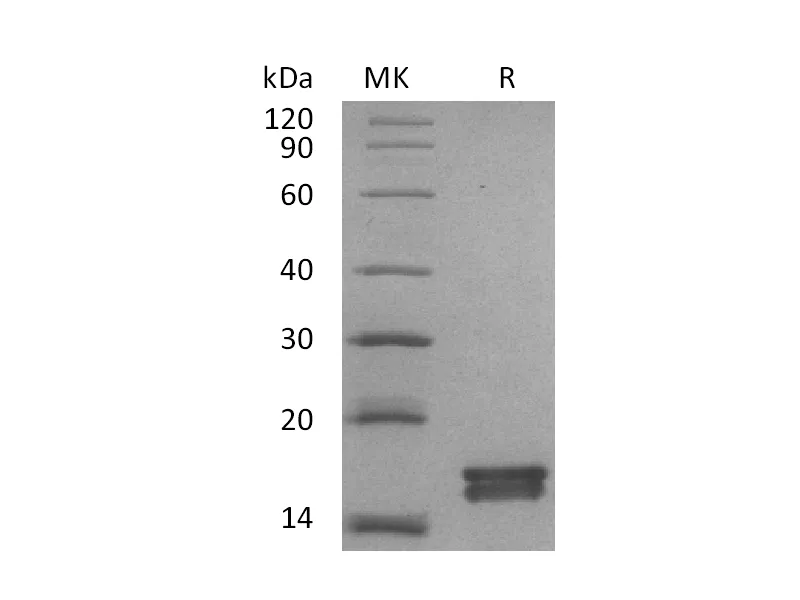
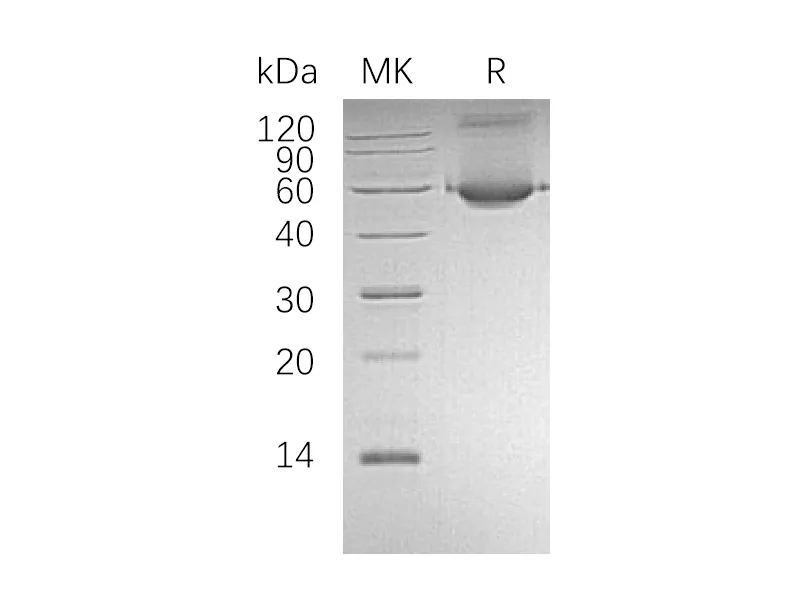
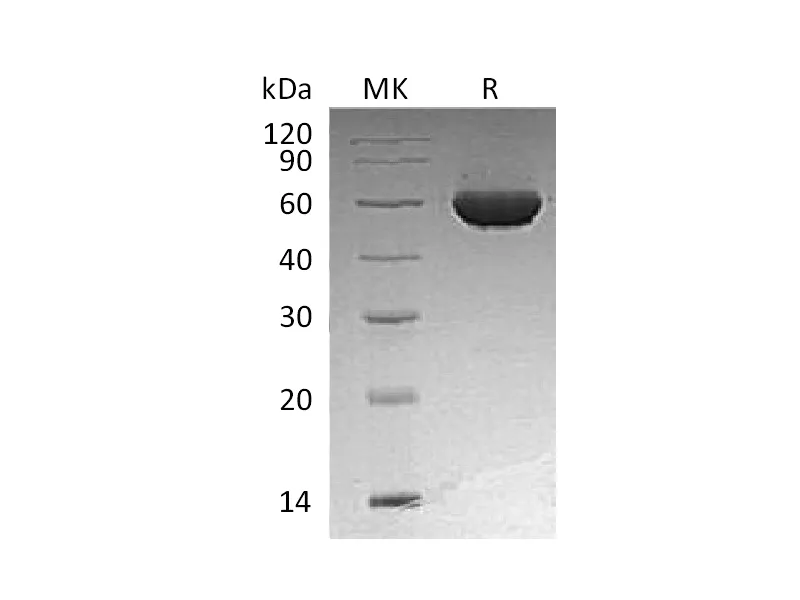
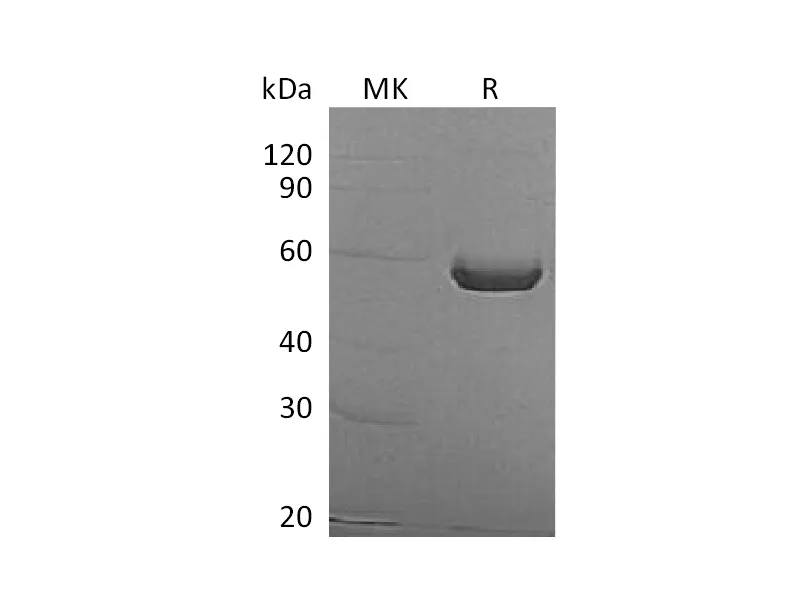
| Purity | Greater than 95% as determined by reducing SDS-PAGE |
| Endotoxin level | <1 EU/µg as determined by LAL test. |
| Construction | Recombinant Human Natural Cytotoxicity Triggering Receptor 3 is produced by our Mammalian expression system and the target gene encoding Leu19-Thr138 is expressed with a human IgG1 Fc tag at the C-terminus. |
| Accession # | O14931 |
| Host | Human Cells |
| Species | Human |
| Predicted Molecular Mass | 40.2 KDa |
| Buffer | Lyophilized from a 0.2 μm filtered solution of PBS, pH 7.4. |
| Form | Lyophilized |
| Shipping | The product is shipped at ambient temperature.Upon receipt, store it immediately at the temperature listed below. |
| Stability&Storage | Store at ≤-70°C, stable for 6 months after receipt.Store at ≤-70°C, stable for 3 months under sterile conditions after opening. Please minimize freeze-thaw cycles. |
| Reconstitution | Always centrifuge tubes before opening.Do not mix by vortex or pipetting.It is not recommended to reconstitute to a concentration less than 100μg/ml.Dissolve the lyophilized protein in distilled water.Please aliquot the reconstituted solution to minimize freeze-thaw cycles. |
Alternative Names
Natural Cytotoxicity Triggering Receptor 3; Activating Natural Killer Receptor p30; Natural Killer Cell p30-Related Protein; NK-p30; NKp30; CD337; NCR3; 1C7; LY117
Background
Natural Cytotoxicity Triggering Receptor 3 (NCR3) along with NKp44 and NKp46 constitute a group of receptors termed “Natural Cytotoxicity Receptors”. They play a major role in triggering NK-mediated killing of most tumor cells lines. NKp30 is a type I transmembrane protein having a single extracellular V-like immunoglobulin domain. NKp30 is selectively expressed both in resting and activated human NK cells. In addition, NKp30 is also involved in NK-mediated induction of dendritic cell (DC) maturation. It has been demonstrated that NK cell activation signaling specifically induces lytic activity against several tumor cell types and synthesis of new NF-κB dependent proteins during the initiation of cytotoxicity.
Note
For Research Use Only , Not for Diagnostic Use.